
Alpine Currant
$19.00 CAD
Find plants by what you want them to bring to your garden.


Seven currants grown for different reasons: native fruit and wildlife, spring flowers, or a dense hedge.


Compare a spreading species shrub, two named fruit selections and an ornamental grown for golden foliage.


Three bush cherries with red, black or white fruit.
Grow a living boundary, soften a fence or shelter a corner from wind. Choose dense shrubs for clipping, evergreen cover, or a thicket with room to spread.
Dense, rounded growth for a hedge or border.

A drought tolerant living fence or windbreak.

Grows fast and dense; good for a screen.

Clips into a formal hedge, or grows as a natural screen.

Evergreen screen; deer can browse it heavily.
 Sold out
A compact screen for a smaller landscape.

Dense, thorny growth that suckers into a thicket.
Hedge packs · save 20 to 26%
Caragana and alpine currant in packs for a hedge, windbreak or border.
Caragana, 5 plugs · $35.00 ($7.00 each, $9.00 singly)
Alpine currant, 3 pots · $45.00 ($15.00 each, $19.00 singly)
Alpine currant, 5 pots · $70.00 ($14.00 each, $19.00 singly)
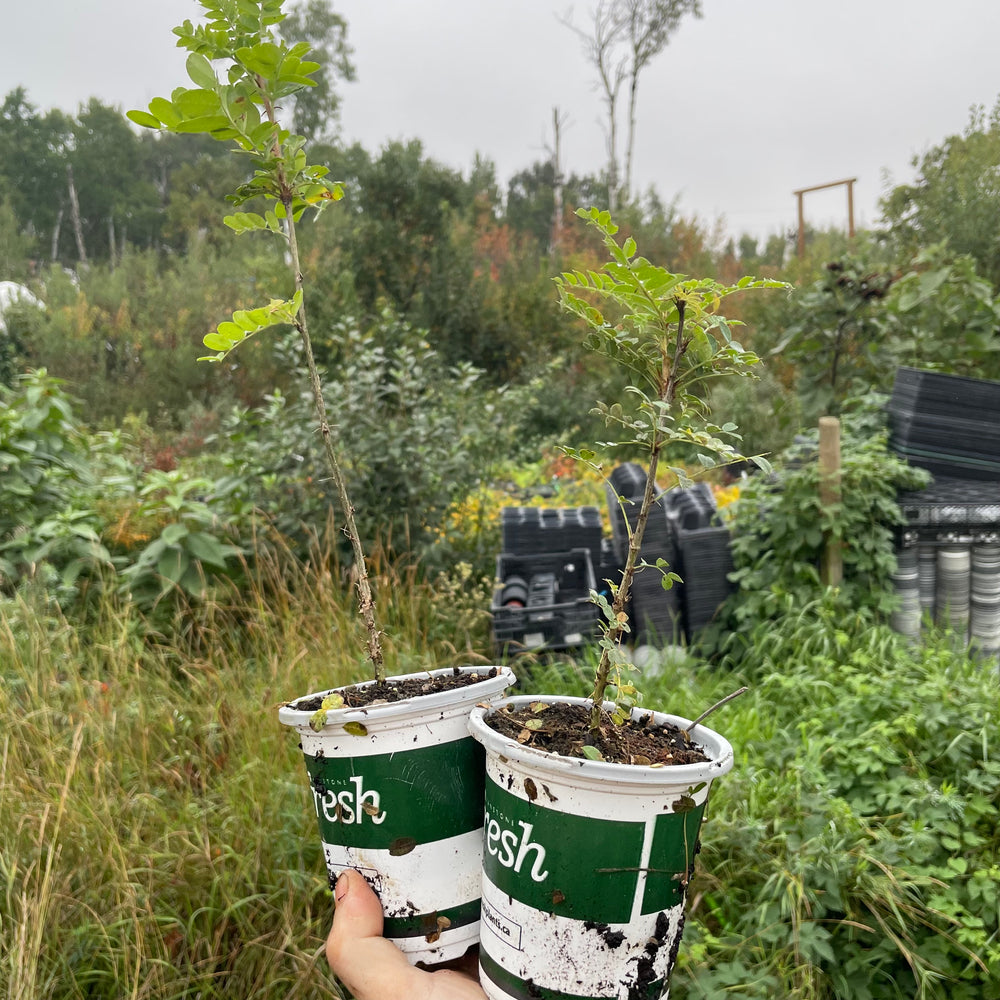
Give birds and pollinators food through different parts of the season. Spring flowers, later berries and spreading cover each do a different job.

Deep red spring flowers feed hummingbirds; later berries feed birds. A local trial.

Flowers for bees and hummingbirds, berries for wildlife.

A low woodland ground layer for wildlife and native pollinators.

Spring flowers and blue black fruit for birds; suckers into cover.

Fruit for wildlife on a spreading shrub that tolerates dry, poor soil.

Fruit for birds and a vigorous climbing cover; needs room and control. Fruit is not edible for people.

Red orange berries attract birds in late summer and fall.

Early catkins provide pollen for bees on moist or wet ground.

A woodland groundcover with red berries for birds and small mammals.
Grow fruit shrubs for your kitchen and for wildlife. A mix of flowers, berries and cover makes room for both in the garden.

Dark fruit and wildlife habitat from Manitoba collected seed; berries can ripen unevenly.

Sour red berries and cover for wildlife in a wet or boggy spot.
 Crandall clove currant cuttings (Ribes odoratum), shown to illustrate the species.
Fragrant spring flowers and tart to sweet tart fruit, with shelter for wildlife.
 Sold out
Sweet tart green fruit and habitat for pollinators and wildlife.

Green to reddish fruit on a densely spined shrub that supports wildlife.

August fruit on a native Great Plains shrub.

A compact thicket with black fruit that can remain into winter for wildlife.

Tart red plums for jam and preserves, with food and cover for wildlife.

Fruit from local wild raspberry stands; brighter light generally brings more fruit.

Fruit for preserves and wildlife cover; use only fully ripe berries cooked, with stems removed.
Sweet blue black fruit for preserves and birds, on a suckering shrub.

Sweet fruit that can hang into winter and feed birds and mammals.
Make room for a fruit you have not grown before. These give you different flavours and uses, with the variation and pollination needs of seedlings kept in mind.

Sweet, slightly tart red berries for eating fresh or drying.

An uncommon fruit shrub with tart, cherry like fruit.

Aron’s purple black fruit is used for juice and preserves; these seedlings can vary.

Try fruiting quince for preserves; these seedlings can vary in fruit and growth.

Explore white to pink mulberries; seedlings include male and female plants. Plant only where ecologically appropriate.

Tart fruit for juice and preserves; fruit requires both sexes, and these seedlings’ sex is unknown.
Small blue black fruit on a dense, thorny thicket.
Plant for the ground you have when a spot is dry, sandy or poor. These shrubs bring flowers, shelter or fruit to those sites; some need time to establish.
Tolerates sandy, dry and poor ground; spreads for windbreaks or erosion control.
A drought tolerant shrub for a windbreak or living fence.
Crandall clove currant cuttings (Ribes odoratum), shown to illustrate the species.
Fragrant flowers and fruit on canes that tolerate drought and alkaline soil.
Tolerates poor soil and drought once established.
Flowers and wildlife fruit for dry, rocky slopes; being evaluated here.
Use a wet or shaded corner for woodland cover, flowers or wildlife. Match the plant to the moisture and light it needs.
A low, spreading shrub for bogs, wet woodland and stream margins.
A low woodland ground layer for wildlife and native pollinators.
Tolerates wet ground and suits a rain garden or naturalized planting.
A spreading groundcover for cool, moist, acidic soil in shade.

A small understory maple for cool, moist woodland conditions.
Plant a tree for shade, autumn colour or a focal point. Choose a compact tree for a smaller space, or leave room for a larger crown.
Sweet fruit that can hang into winter and feed birds and mammals.

Rounded shade and dense foliage; drought can scorch leaves. Seeds are poisonous.

Fast growth and white peeling bark, with seeds and buds for wildlife.
Sold out
A compact specimen tree with red and orange fall colour.
A small understory maple for cool, moist woodland conditions.
A specimen tree with red orange berries that attract birds.
Bring scent and spring colour close to a path or sitting place. Fragrant lilacs and currants offer different flowers, with hummingbirds drawn to Twisp River’s red clusters.

Strongly fragrant purple flowers in late spring.

White and pink flowers from a lilac growing on our farm.
Crandall clove currant cuttings (Ribes odoratum), shown to illustrate the species.
Fragrant yellow spring flowers, followed by late summer fruit.
Deep red spring flowers for hummingbirds; a local trial.