
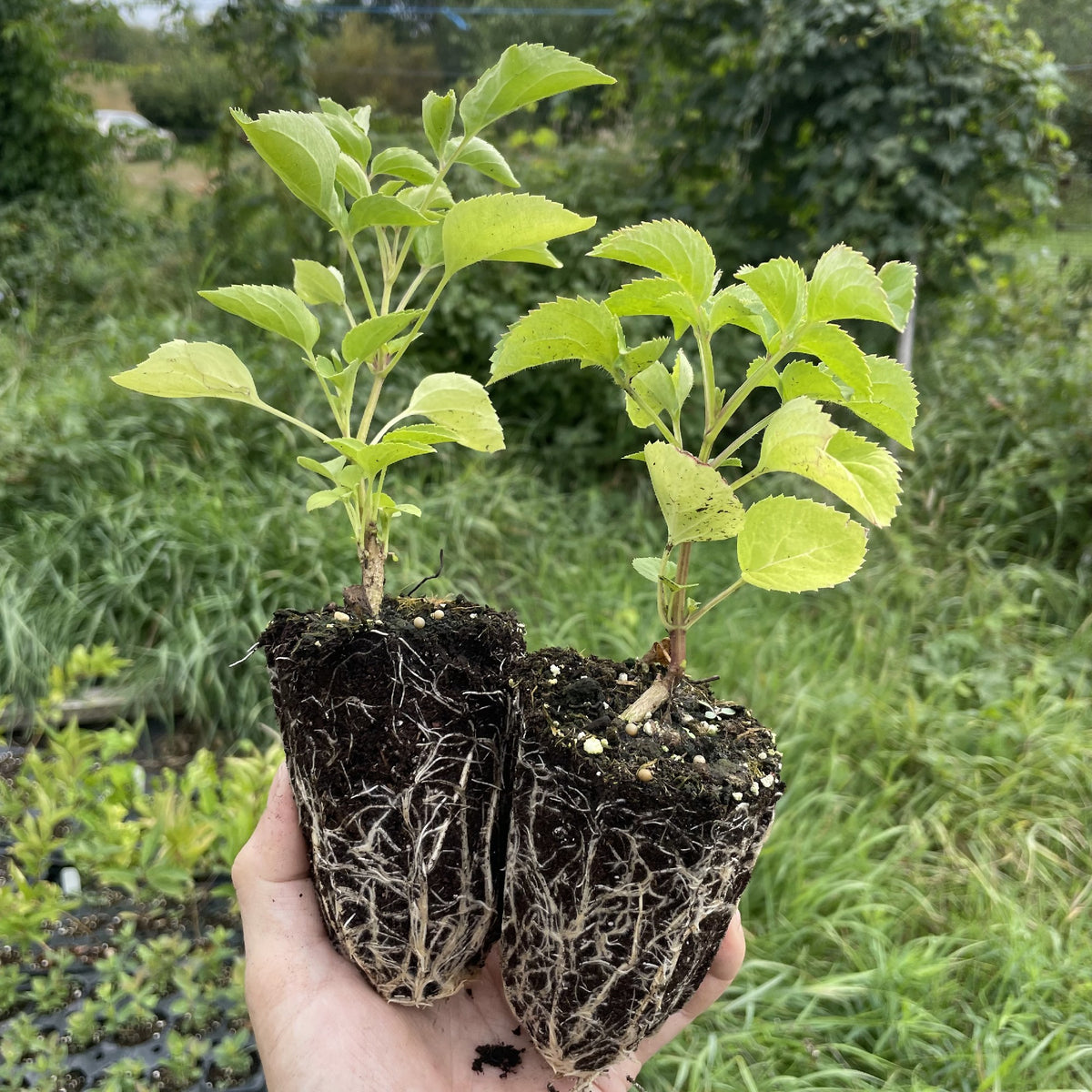
Wyldewood Elderberry
$19.00 CAD
Oak Summit Nursery
Plant orders start at $30.
Couldn't load pickup availability
American elderberry (Sambucus canadensis) is a spreading North American shrub with broad clusters of small purple black berries. Fully ripe, cooked fruit is used in preserves, baking and juice, while the shrubs provide food and cover for wildlife.
Summer flower clusters stand above the foliage, followed by fruit later in the season. The shrub tolerates occasional wetness and spreads by suckers, making it useful for naturalized hedges where it has room to form a thicket.
Use only fully ripe berries cooked, with stems removed. Unripe berries, leaves and stems are not edible.
Winter tree ordering reminder
This tree is currently unavailable. Add a reminder and we’ll email when it returns for the winter tree ordering season.
Manage this reminder with your saved products from the header.
August to September
For the species in North Carolina
American elderberry forms a spreading shrub rather than a single orchard trunk. Its summer flowers and later berry crop make it useful in a mixed fruit hedge. The named cultivars below offer different habits and harvest seasons within the same species.
American elderberry is borderline hardy at our Zone 3 nursery and can die back to snow level. We rate it Zone 3/4.

Green: provinces with native records
MB · NB · NS · ON · PE · QC
Zone 3 and warmer
Province records show native distribution, not every place the species grows. The hardiness map shows minimum winter hardiness; soil, moisture and summer warmth also matter.
Climate: Natural Resources Canada, 1991–2020. Provincial distribution: VASCAN via retained botanical research. Province outlines: Natural Earth, public domain.
Open Government Licence – CanadaA different American elderberry growing nearby can improve the crop. The selections below are all American elderberry.
| Plant alongside | Pollination requirement |
|---|---|
| Wyldewood Elderberry | A different selection of American elderberry. |
| York Elderberry | A different selection of American elderberry. |
Compare named selections of American elderberry.
American elderberry seeds produce a varied population, rather than copies of a named cultivar.