


Oak Summit Nursery
Sapalta Cherry Plum
Sapalta Cherry Plum
Regular price
$19.00 CAD
Regular price
Sale price
$19.00 CAD
Unit price
per
Plant orders start at $30.
Compare offered sizes
Couldn't load pickup availability
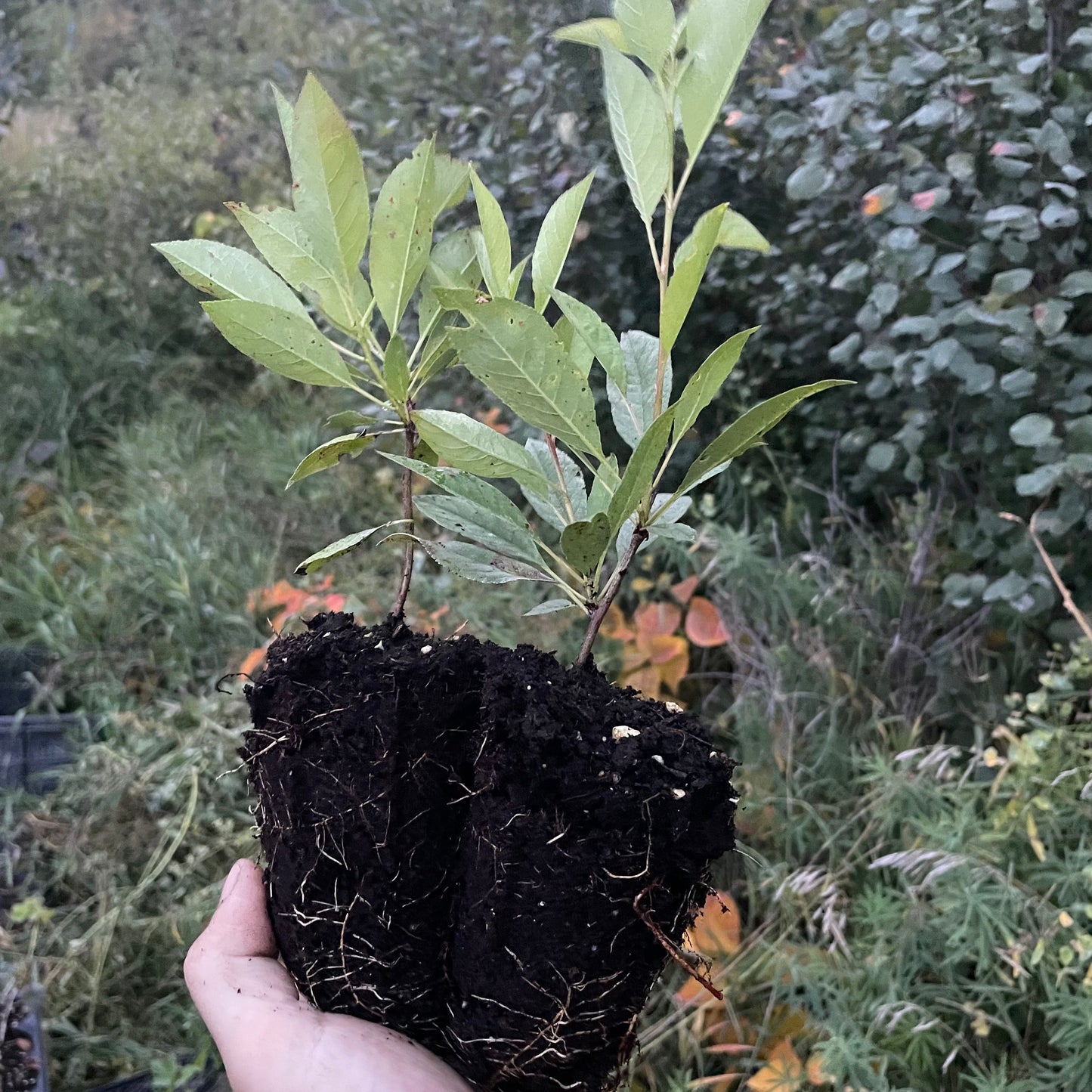
Sapalta Cherry Plum is an open pollinated seedling of Sapa introduced from Brooks, Alberta, in 1941. Its reddish purple fruit resembles Sapa and ripens in mid August.
The plums have deep purple firm flesh and tart skin, with a sweet tart flavour suited to fresh eating, canning, and jam.
Compare the cherry plum cultivars growing at Oak Summit Nursery.
Sold out for this fall. Add a reminder and we will email you when it is back.
Manage this reminder with your saved products from the header.


Growing details
- Hardiness
- Zone 3
- Fruit
- Reddish purple fruit with firm, deep purple fleshSweet and tart, with a tart skin
- Uses
- Fresh eating, canning and jam
- Mature size
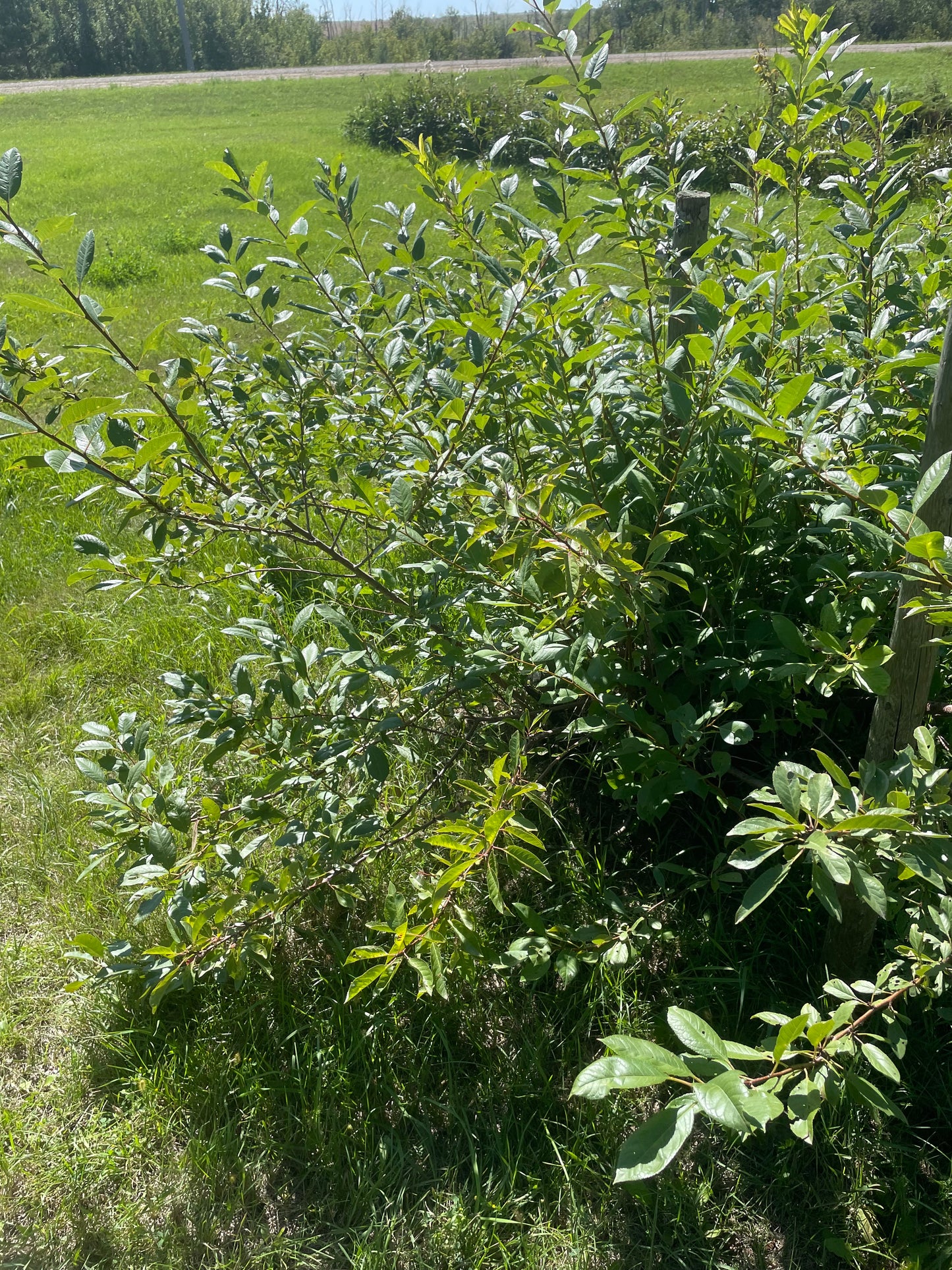
- 8 to 10 ft tall
- Site and soil
- Full sun and soil that drains wellAvoid low spots where frost settles
Ripening
Mid August
Timing varies with season and site
More about this plant
A seedling of Sapa
Sapalta is an open pollinated seedling of Sapa, introduced from Brooks, Alberta, in 1941. Its fruit resembles Sapa.
Cold hardinessZone 3 · Canadian maps for this plant

Zone 3 and warmer
The map shows minimum winter hardiness. Soil, moisture and summer warmth also affect how a plant grows.
About these maps
Climate: Natural Resources Canada, 1991–2020. Provincial distribution: VASCAN via retained botanical research. Province outlines: Natural Earth, public domain.
Open Government Licence – CanadaPollination
Sapalta needs pollen from another cherry plum. Opata and Convoy have given good results. Sapa and Manor performed poorly as pollen sources for Sapalta. Western sandcherry and American wild plum may also supply pollen, though neither is a sure thing.
The cherry plums we list are sold out right now. Ask us about another cherry plum.
How the cherry plums compare
The cherry plums we grow, side by side.
| Variety | Introduced | Parentage | Fruit | Size | Flavour and use |
|---|---|---|---|---|---|
| Compass | 1896. H. Knudson, Minnesota | Sandcherry crossed with a native plum. Accounts differ on which | Dark purple red skin, yellowish flesh | About 1 in | Jelly and canning |
| Sapa | 1908. Niels Hansen, South Dakota Experiment Station | Sandcherry × Sultan Japanese plum | Purple skin with a blue bloom, dark purple flesh | Small, about 1 in | Sweet and tart. Jam and canning |
| Opata | 1908. South Dakota Experiment Station | Sandcherry × Gold Japanese plum | Dark purplish red skin with a blue bloom, green flesh | About 1⅜ in | Sweet with a lively acid note. Preserves |
| Sapalta | 1941. Introduced from Brooks, Alberta | Open pollinated seedling of Sapa | Reddish purple skin, deep purple flesh | Small to medium | Sweet and tart. Fresh, canning and jam |
| Convoy | 1941. Released by Boughen Nurseries, Manitoba | Western sandcherry × Japanese plum | Red skin, yellow flesh | About ¾ to 1¼ in | Sweet and juicy. Fresh, preserves, baking and canning |
| Dura | 1942. Morden Experimental Station, Manitoba | Seedling of Sapa | Dull green skin blotched with purple, red flesh | About 1⅜ in | Canning |
| Manor | 1945. Morden Experimental Station, Manitoba | Seedling of Sapa | Dark purple skin, purplish red flesh | Small, 1 to 1¼ in | Fresh, jam and canning |
| Kappa | 1960. Cecil Patterson, University of Saskatchewan | Sandcherry × Japanese plum | Dark bluish black skin. Sources disagree on the flesh colour | Small | Sweet and fruity. Fresh, jam and canning |
| New Oka | Not recorded | Western sandcherry × Japanese plum | Dark bluish black skin, wine red flesh | About 1.2 in | Highly flavoured. Fresh and preserves |
Years, parentage and introducers are as the nursery has long listed them, and have not all been checked against breeders' records.
Accounts of Compass differ, and its skin colour remains uncertain.
New Oka's colour and size are as Prairie growers describe this group of cherry plums.
Convoy's size is one retailer's figure.