


Frontenac Grape Seeds
$7.95 CAD
Oak Summit Nursery
Plant orders start at $30.
Couldn't load pickup availability
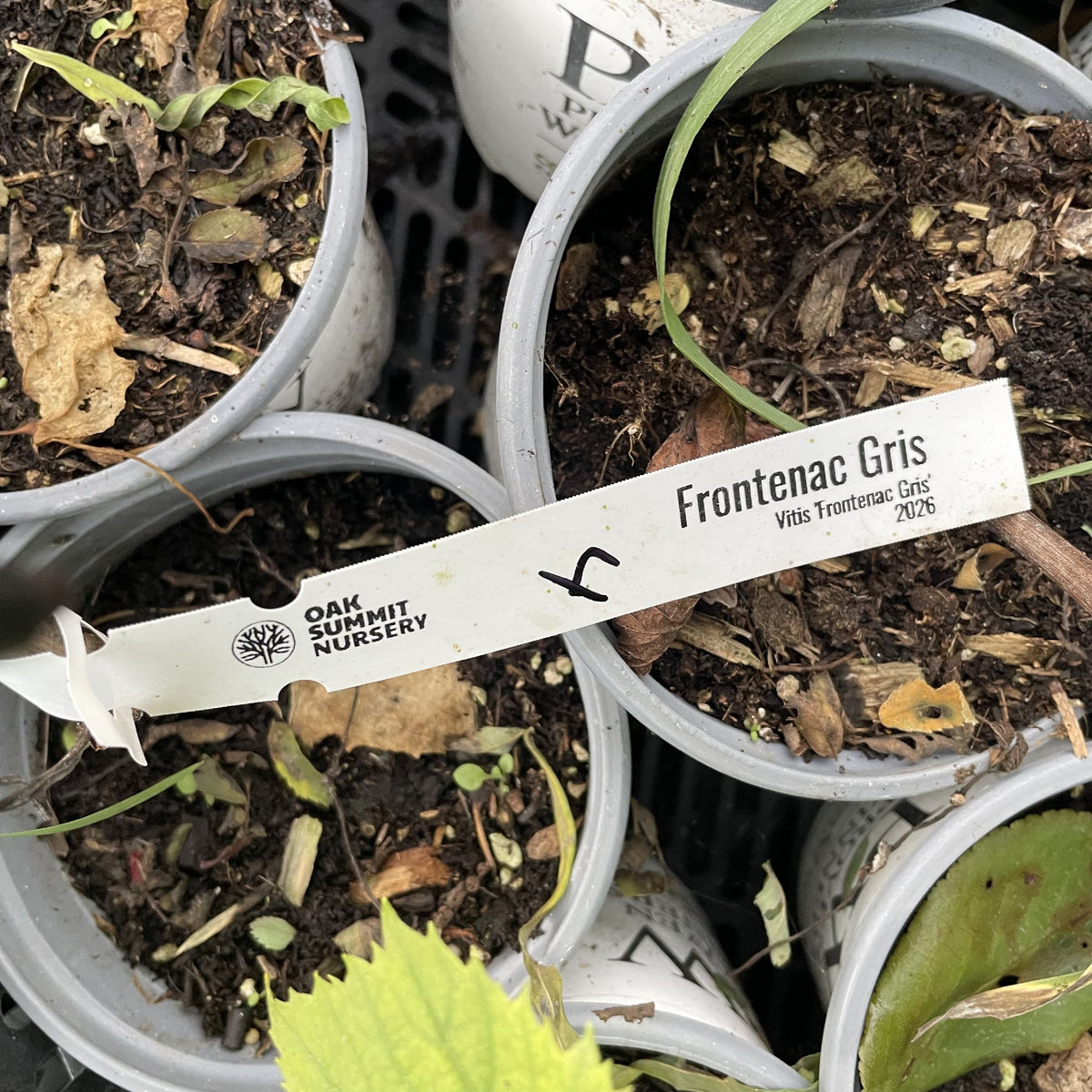
Frontenac Gris is a cold hardy wine grape released by the University of Minnesota in 2003. It produces loose clusters of pink grey berries used for white to amber wines. The university describes peach, pineapple and honey characters in the finished wine; those are wine descriptors rather than a promise about the flavour of fresh berries.
The vine is vigorous and semi trailing, so it benefits from a sturdy trellis, annual pruning and enough season to ripen its fruit. The breeder reports an average harvest around September 27 in east central Minnesota. Manitoba harvest timing will vary with site and season.
Frontenac Gris survived temperatures around −35°F (about −37°C) in Minnesota trials. We list it as Zone 3 under our nursery default while we continue local evaluation. The cultivar can show moderate susceptibility to powdery mildew and foliar phylloxera, so it should not be treated as disease free.
Cold Hardiness Zone: 3
Botanical name: Vitis hybrid
Fruit: Pink grey berries in loose clusters
Use: White and amber wine
Training: Sturdy trellis and annual pruning
Winter tree ordering reminder
This tree is currently unavailable. Add a reminder and we’ll email when it returns for the winter tree ordering season.
Manage this reminder with your saved products from the header.


Late September
Average harvest around September 27 in east central Minnesota. Manitoba timing will vary
Frontenac Gris is a cold hardy wine grape released by the University of Minnesota in 2003.

Zone 3 and warmer
The map shows minimum winter hardiness. Soil, moisture and summer warmth also affect how a plant grows.
Climate: Natural Resources Canada, 1991–2020. Provincial distribution: VASCAN via retained botanical research. Province outlines: Natural Earth, public domain.
Open Government Licence – CanadaWe also offer Frontenac grape seeds. Seed grown vines vary and are not clones of Frontenac Gris.