
Toka Plum Tree
$25.00 CAD
Oak Summit Nursery
Plant orders start at $30.
Couldn't load pickup availability
Kahinta is a hybrid plum from N. E. Hansen’s breeding work, introduced in 1912. Prairie Gardens describes purple-red fruit with juicy amber flesh and a sweet, spicy flavour, suited to fresh eating and processing.
It needs a compatible pollinizer; the nursery recommends Canada or American plum. Plant in full sun in a sheltered, well drained site. A reliable harvest month and measured fruit diameter were not established from the opened evidence.
Our fall plants are grown on American plum rootstock.
Cold hardiness zone: 3
Botanical name: Prunus hybrid 'Kahinta'
Fruit: Purple red skin and juicy amber flesh
Flavour: Sweet and spicy
Uses: Fresh eating and processing
Pollination: Another compatible Canada or American plum
Winter tree ordering reminder
This tree is currently unavailable. Add a reminder and we’ll email when it returns for the winter tree ordering season.
Manage this reminder with your saved products from the header.
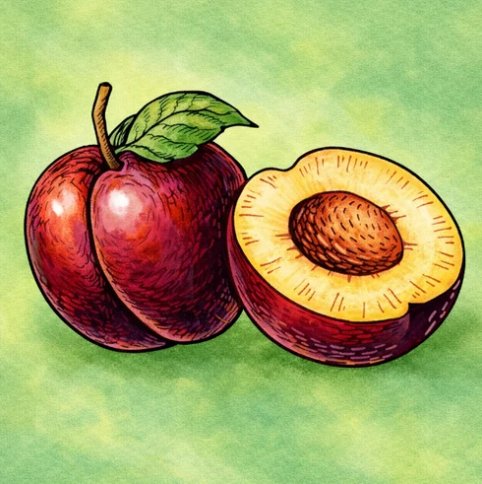
Kahinta is a hybrid plum from the breeding work of Niels Hansen, introduced in 1912. We do not yet have a reliable harvest month or a measured fruit size for it.
Kahinta is a plum bred by N. E. Hansen and introduced from the South Dakota Experiment Station in 1912. It is a full sister of Waneta and came out a year before it. In the very dry summer of 1911 it was the heaviest plum on the station grounds.
Second edition · 5 sources
Read the full account on Pomologica →
Zone 3 and warmer
The map shows minimum winter hardiness. Soil, moisture and summer warmth also affect how a plant grows.
Climate: Natural Resources Canada, 1991–2020. Provincial distribution: VASCAN via retained botanical research. Province outlines: Natural Earth, public domain.
Open Government Licence – CanadaKahinta needs a compatible plum nearby to set fruit. A Canada or American plum is the recommended partner.
| Plant alongside | What we know |
|---|---|
| Canada Plum Wild Seedlings | The recommended kind of partner for Kahinta. |
| American Wild Plum | The recommended kind of partner for Kahinta. |