


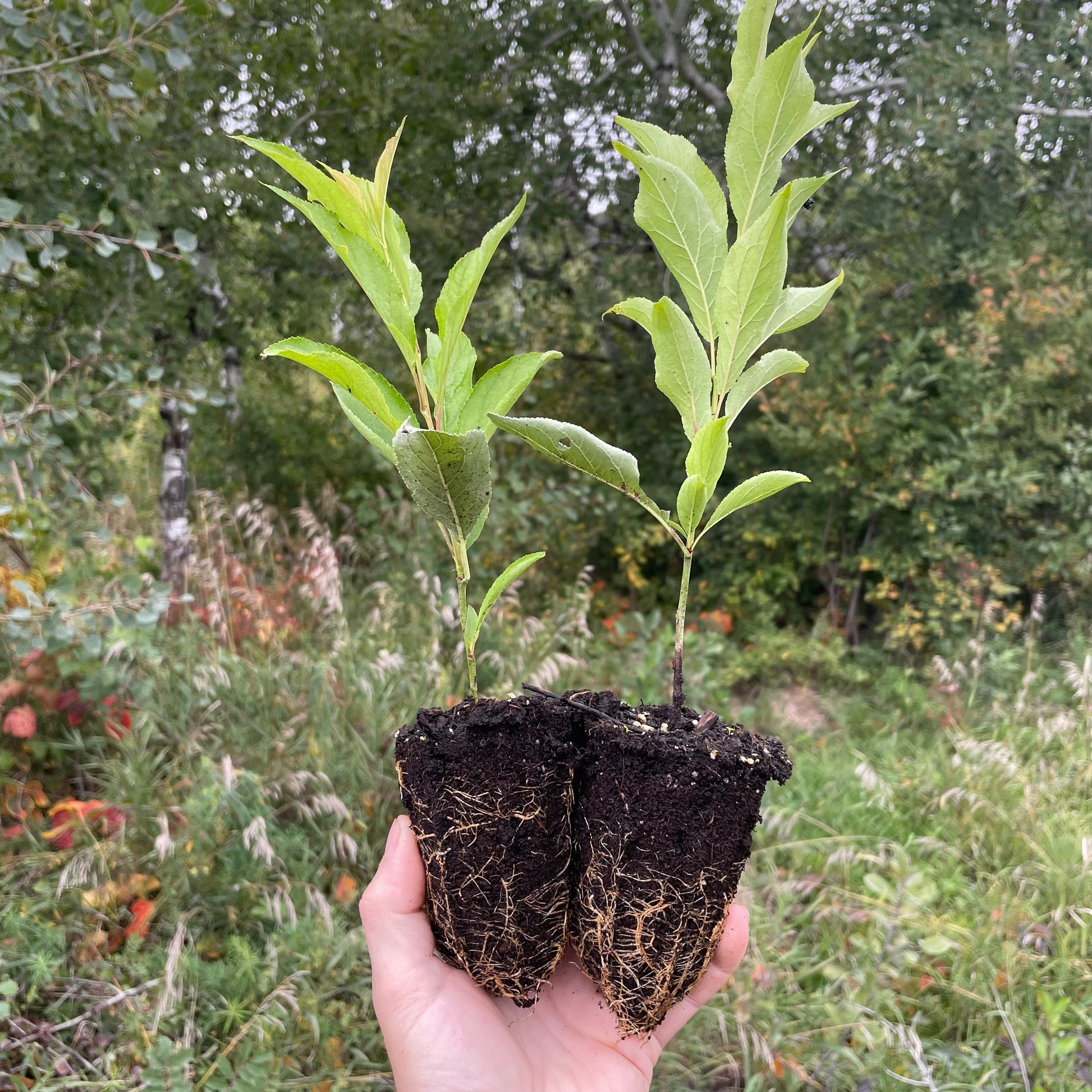
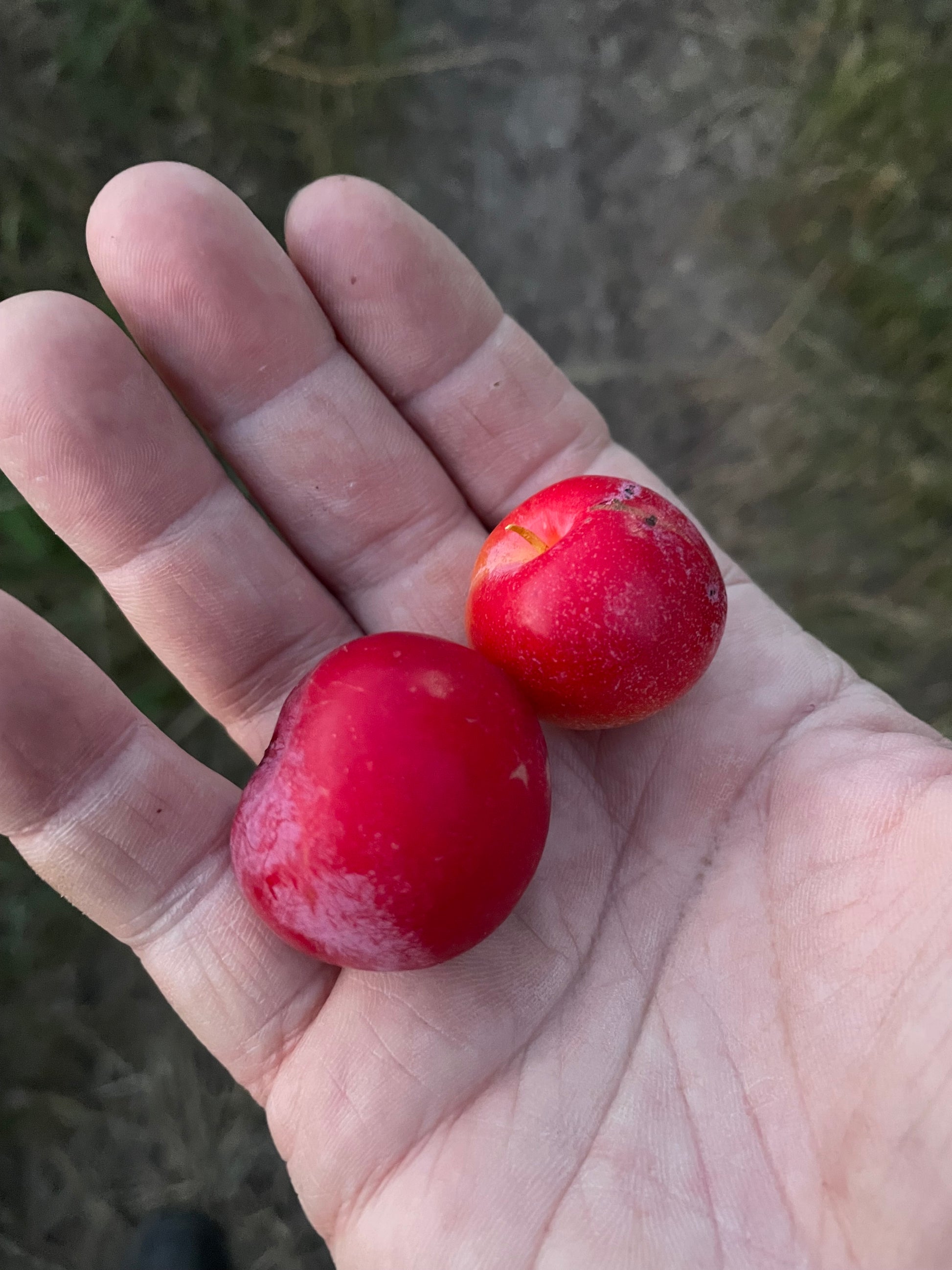
![Toka Plum at Oak Summit Nursery [oak-release-20260829:IMG_2122.jpg]](http://oaksummitnursery.ca/cdn/shop/files/IMG_2122.jpg?v=1788020897&width=1946)
![Toka Plum at Oak Summit Nursery [oak-release-20260829:IMG_2125.jpg]](http://oaksummitnursery.ca/cdn/shop/files/IMG_2125.jpg?v=1788020906&width=1946)
![Toka Plum at Oak Summit Nursery [oak-release-20260829:IMG_2126.jpg]](http://oaksummitnursery.ca/cdn/shop/files/IMG_2126.jpg?v=1788020914&width=1946)
Oak Summit Nursery
Toka Plum Tree
Toka Plum Tree
Regular price
$25.00 CAD
Regular price
Sale price
$25.00 CAD
Unit price
per
Plant orders start at $30.
Compare offered sizes
Couldn't load pickup availability
Toka Plum, also called Bubblegum Plum, was introduced by Niels Hansen in South Dakota in 1911. It is a cross between American Plum (Prunus americana) and Chinese Plum (Prunus simonii).
The small to medium fruit has the sweet aroma and flavour that gave the cultivar its nickname. It ripens from late August into September. Toka can grow on its own roots, a trait we have been testing at the nursery.
Sold out for this fall. Add a reminder and we will email you when it is back.
Manage this reminder with your saved products from the header.


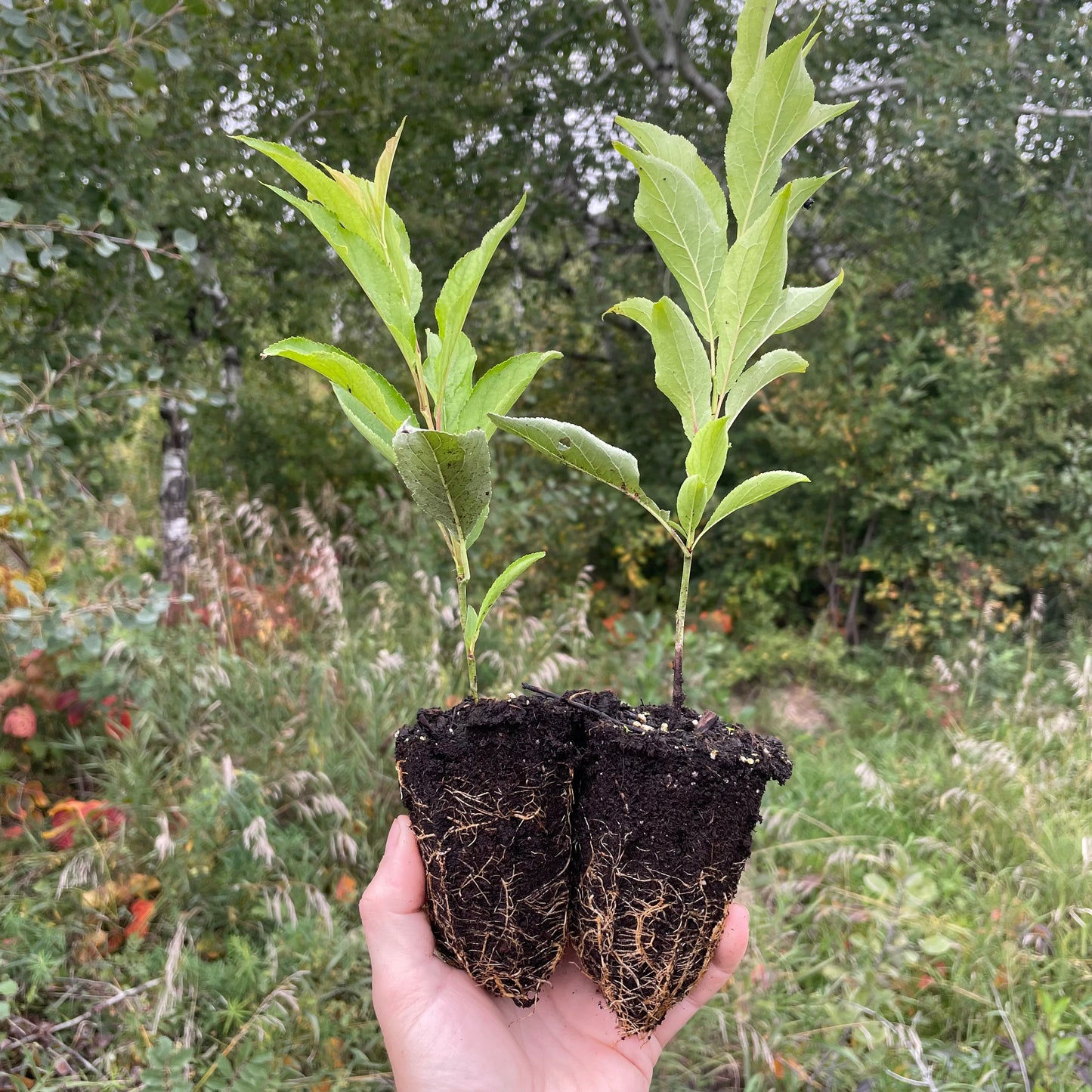
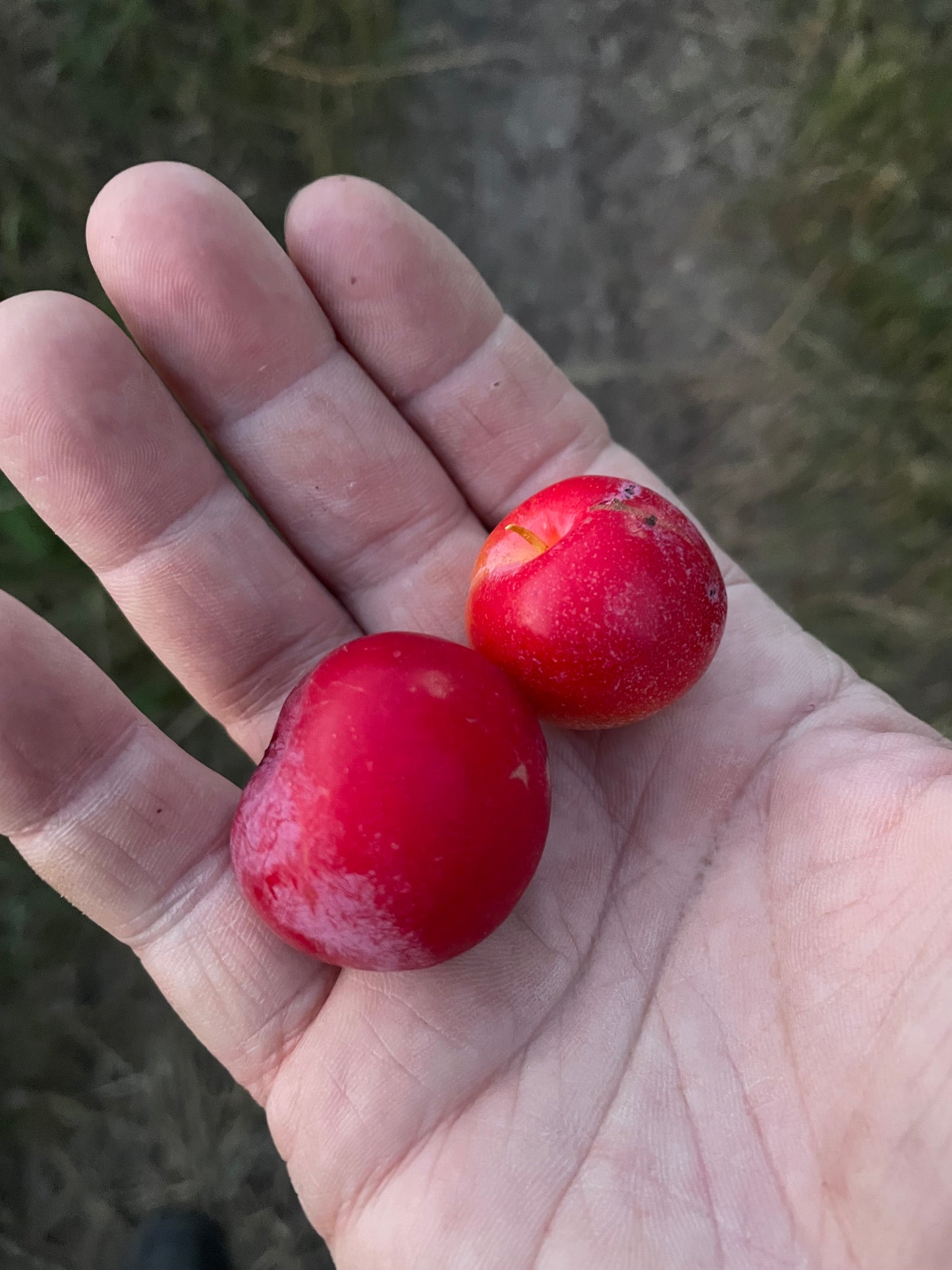
![Toka Plum at Oak Summit Nursery [oak-release-20260829:IMG_2122.jpg]](http://oaksummitnursery.ca/cdn/shop/files/IMG_2122.jpg?v=1788020897&width=1445)
![Toka Plum at Oak Summit Nursery [oak-release-20260829:IMG_2125.jpg]](http://oaksummitnursery.ca/cdn/shop/files/IMG_2125.jpg?v=1788020906&width=1445)
![Toka Plum at Oak Summit Nursery [oak-release-20260829:IMG_2126.jpg]](http://oaksummitnursery.ca/cdn/shop/files/IMG_2126.jpg?v=1788020914&width=1445)
Growing details
- Hardiness
- Zone 3
- Fruit
- Small to medium red plums with a sweet aromaThe plum behind the nickname Bubblegum Plum
- Flavour
- Rich, spicy and sweetWith a strong hint of bubblegum
- Mature size
- 15 to 20 ft tall and about 15 ft wide
- Roots
- Grown on its own rootsNot grafted
- Site and soil
- Full sun and soil that drains wellAvoid low spots where frost settles
Ripening
First week of September
At our nursery in southern Manitoba
More about this plant
Hansen's Bubblegum Plum
Niels Hansen introduced Toka in South Dakota in 1911. He raised it from a cross of American plum and the Chinese apricot plum, Prunus simonii, and the unusual flavour comes from that second parent.
On its own roots
Most plum trees are grafted onto a different rootstock. Toka can be rooted from cuttings, and we have been growing it that way at the nursery. With an own root tree, any shoots that come up from the base are still Toka.
Cold hardinessZone 3 · Canadian maps for this plant

Zone 3 and warmer
The map shows minimum winter hardiness. Soil, moisture and summer warmth also affect how a plant grows.
About these maps
Climate: Natural Resources Canada, 1991–2020. Provincial distribution: VASCAN via retained botanical research. Province outlines: Natural Earth, public domain.
Open Government Licence – CanadaPollination
Toka needs a different plum nearby to set a good crop. A Canada plum is a dependable partner for hybrid plums like Toka.
| Plant alongside | Pollination requirement |
|---|---|
| Canada Plum Wild Seedlings | Canada plum is a good pollen source for cold hardy hybrid plums. |