Oak Summit Nursery
Graines de prunier sauvage d’Amérique
Graines de prunier sauvage d’Amérique
Contenu du sachet : 15+ graines
Aussi offert en plant : Prune sauvage américaine · à partir de 12,00 $
Voir plus de Semences d’arbres fruitiersImpossible de charger la disponibilité du service de retrait
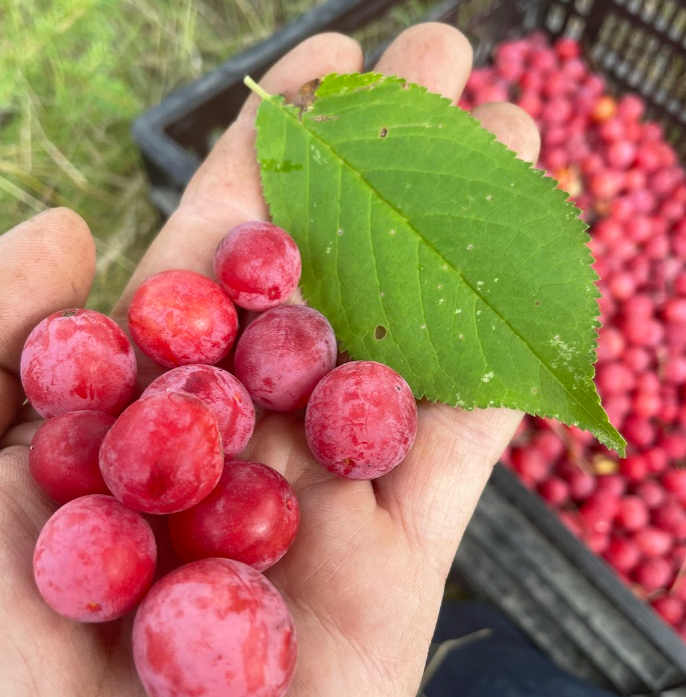
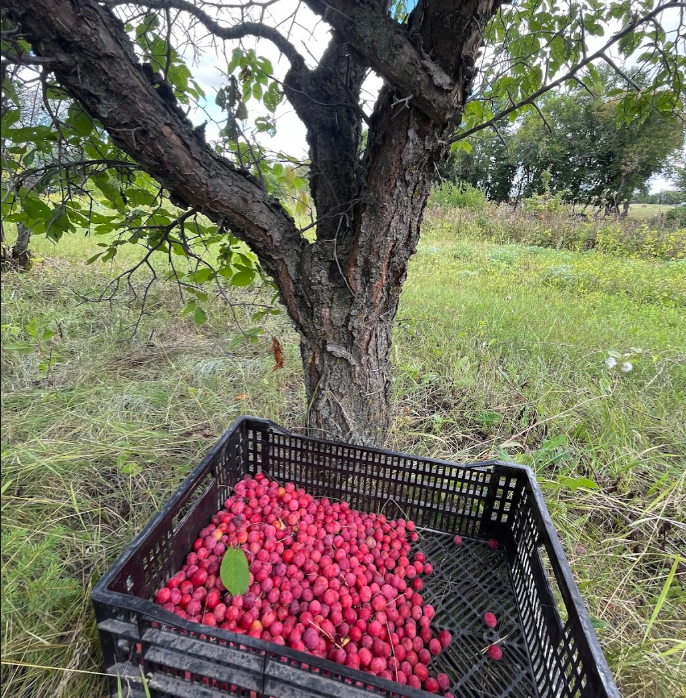
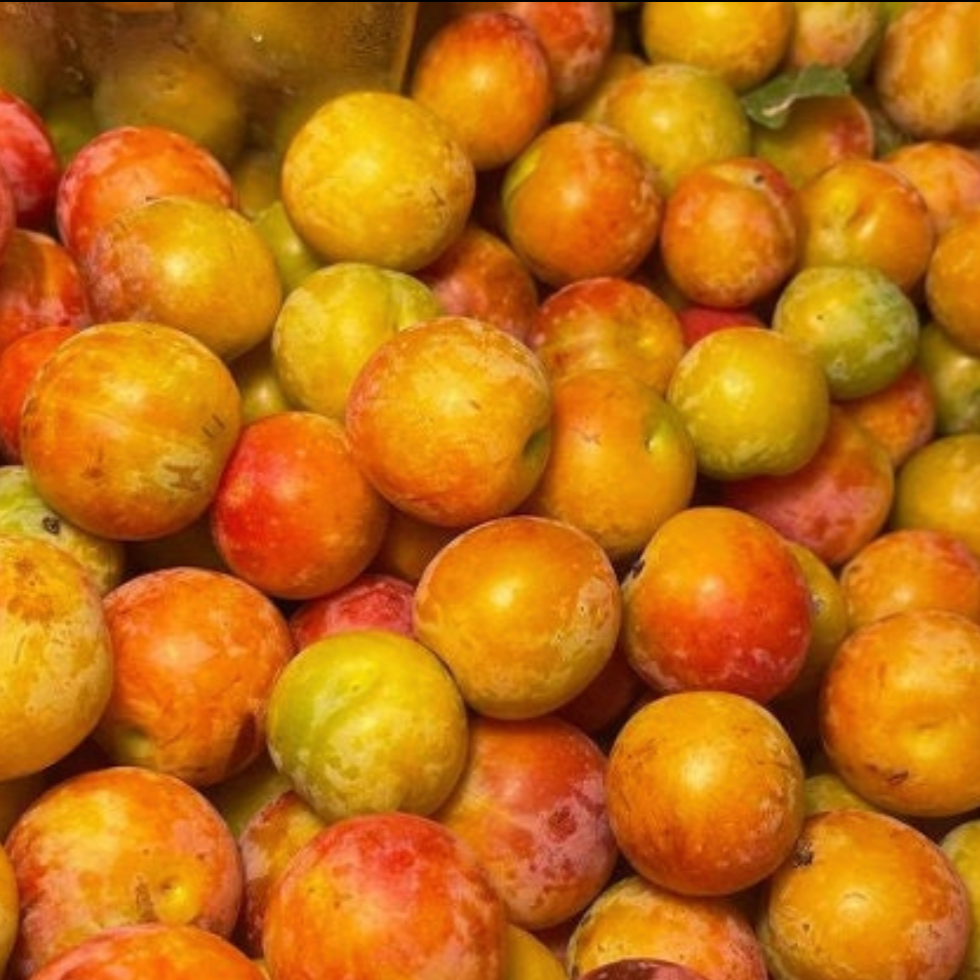
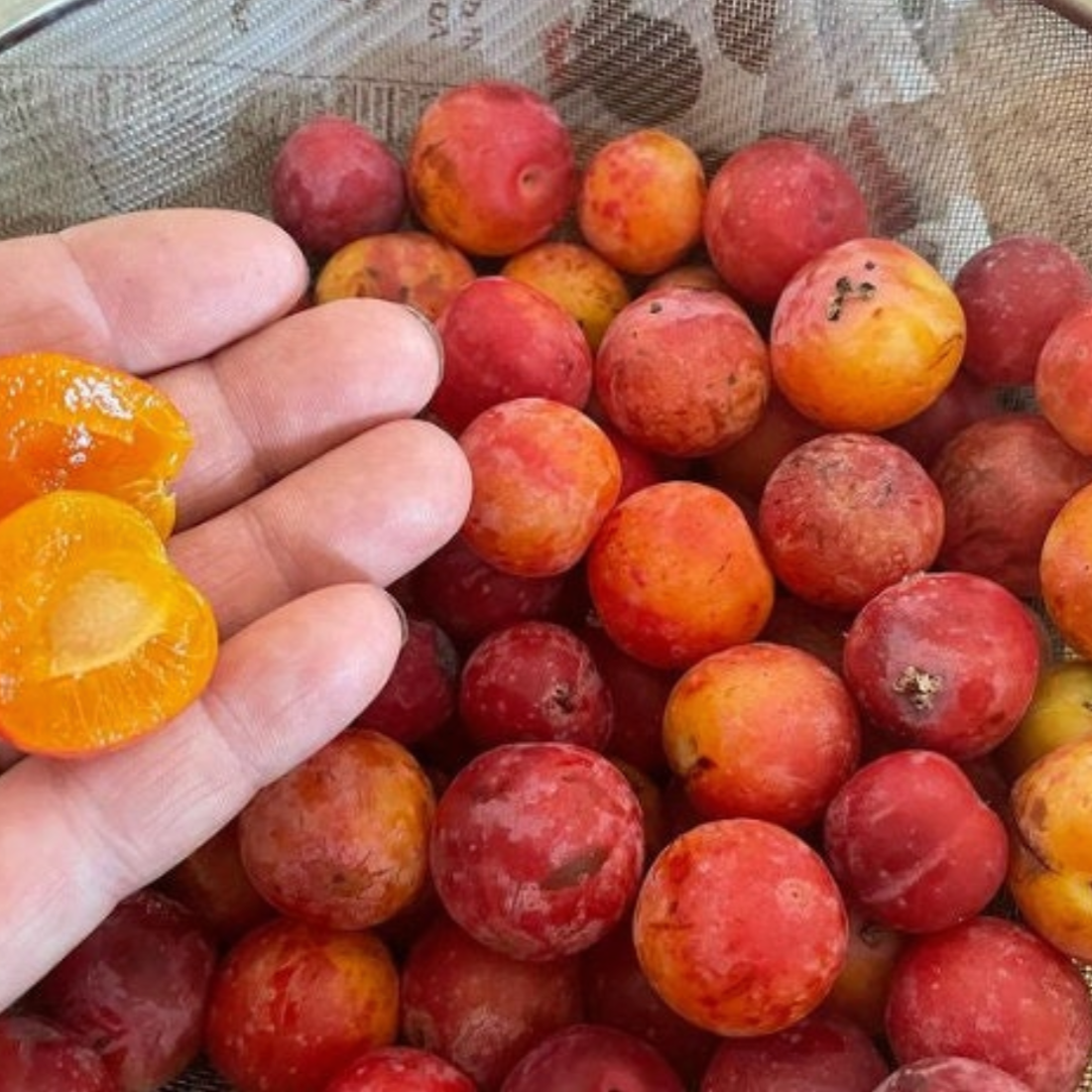
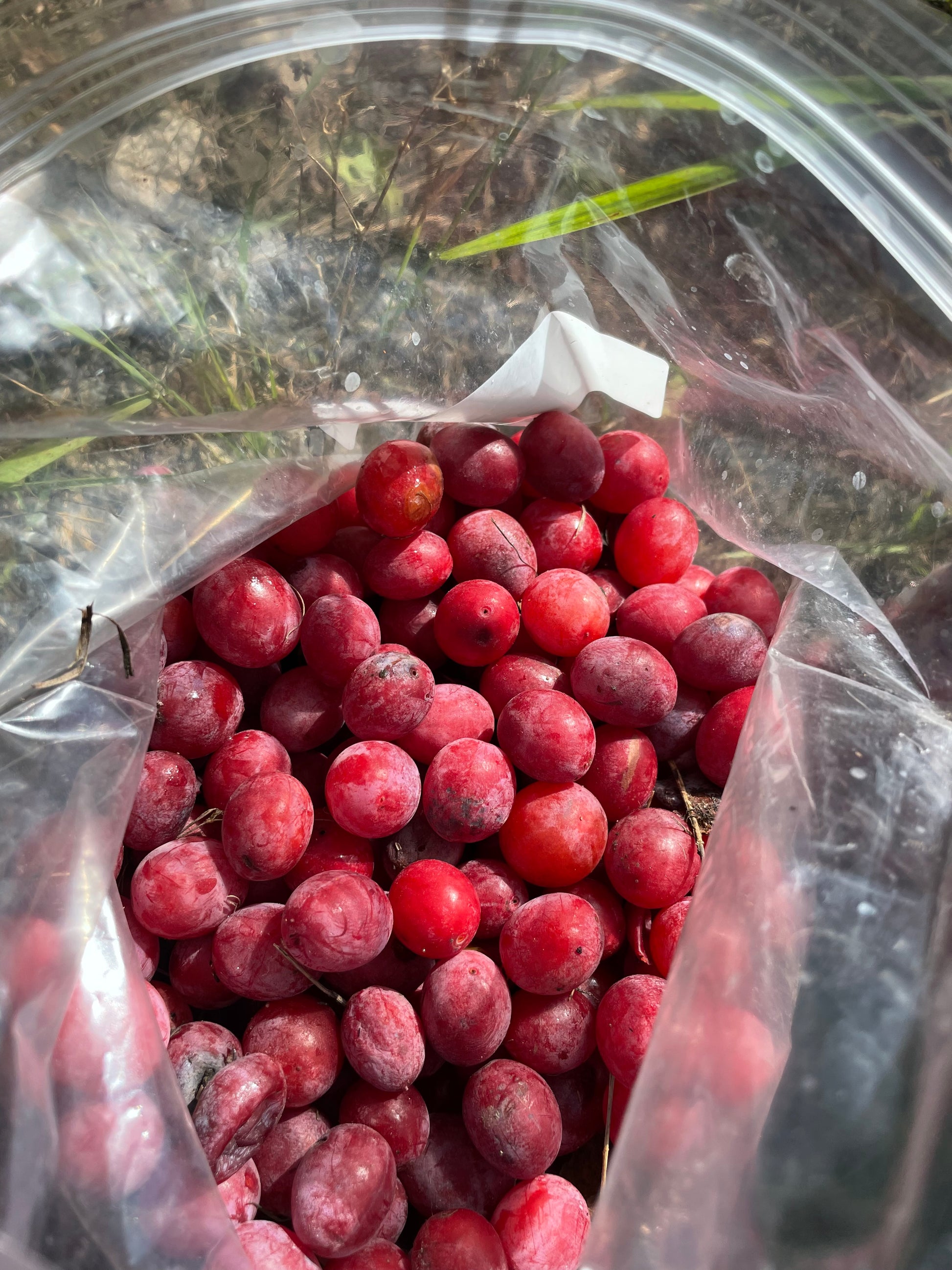
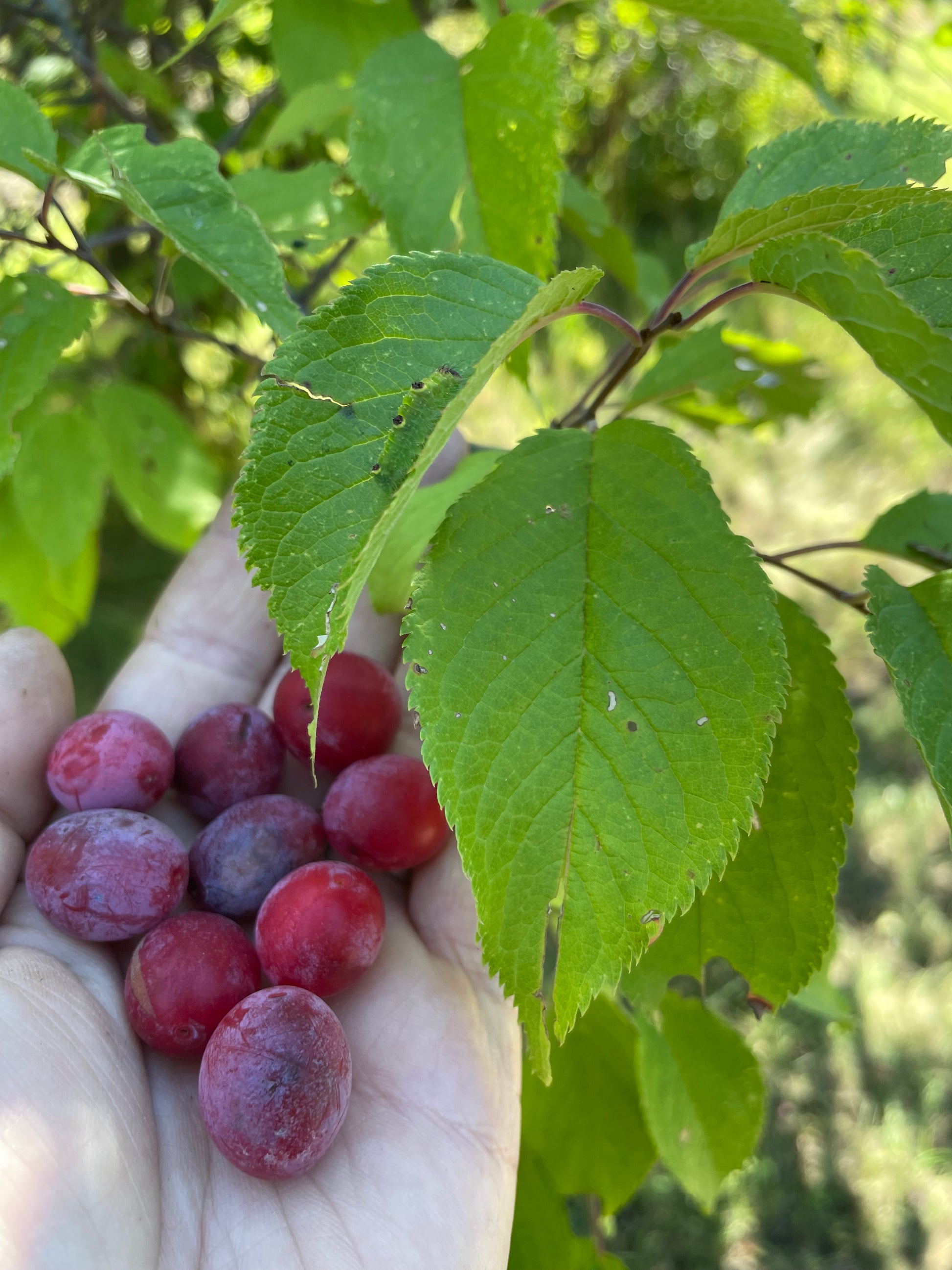
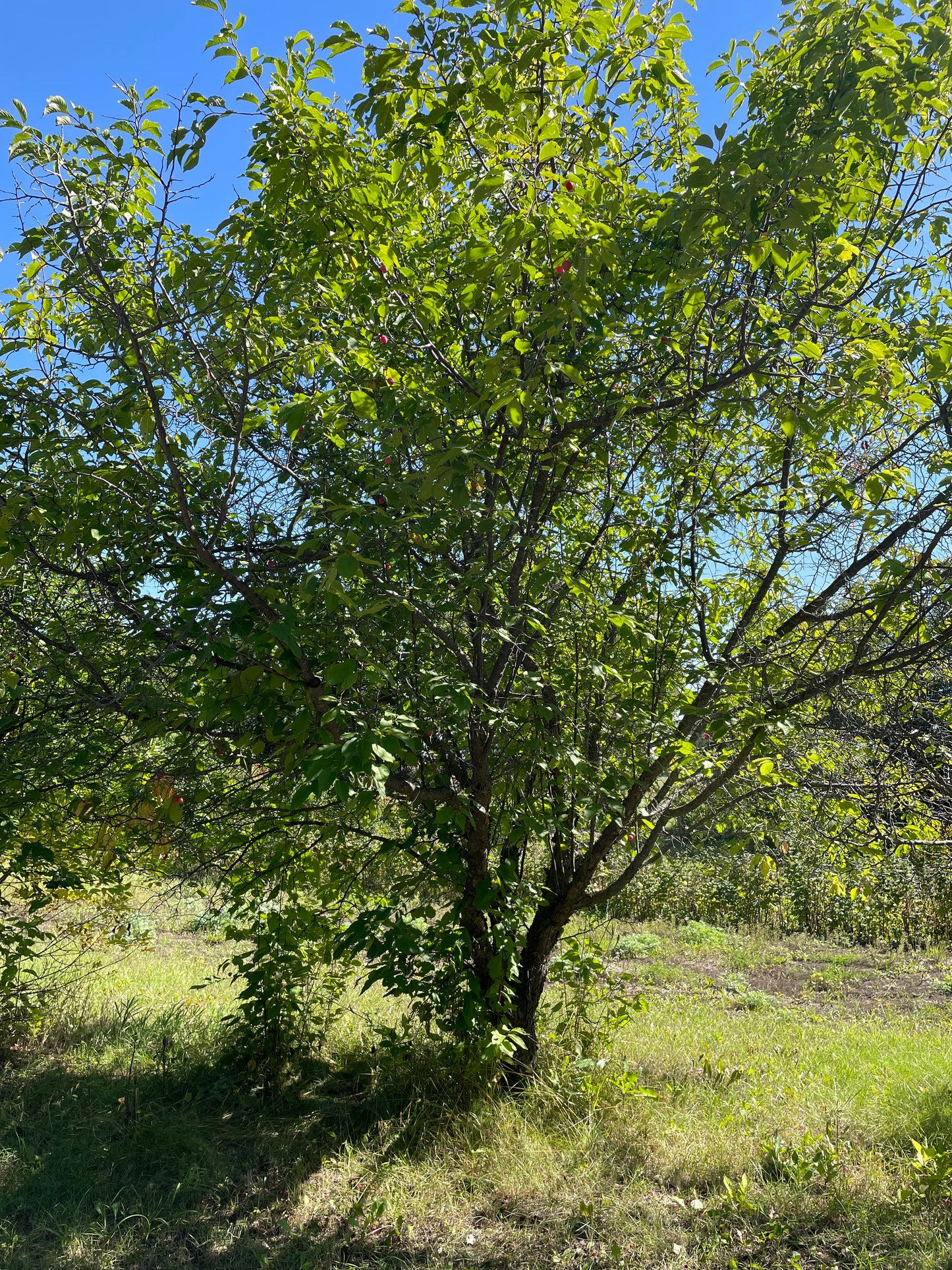
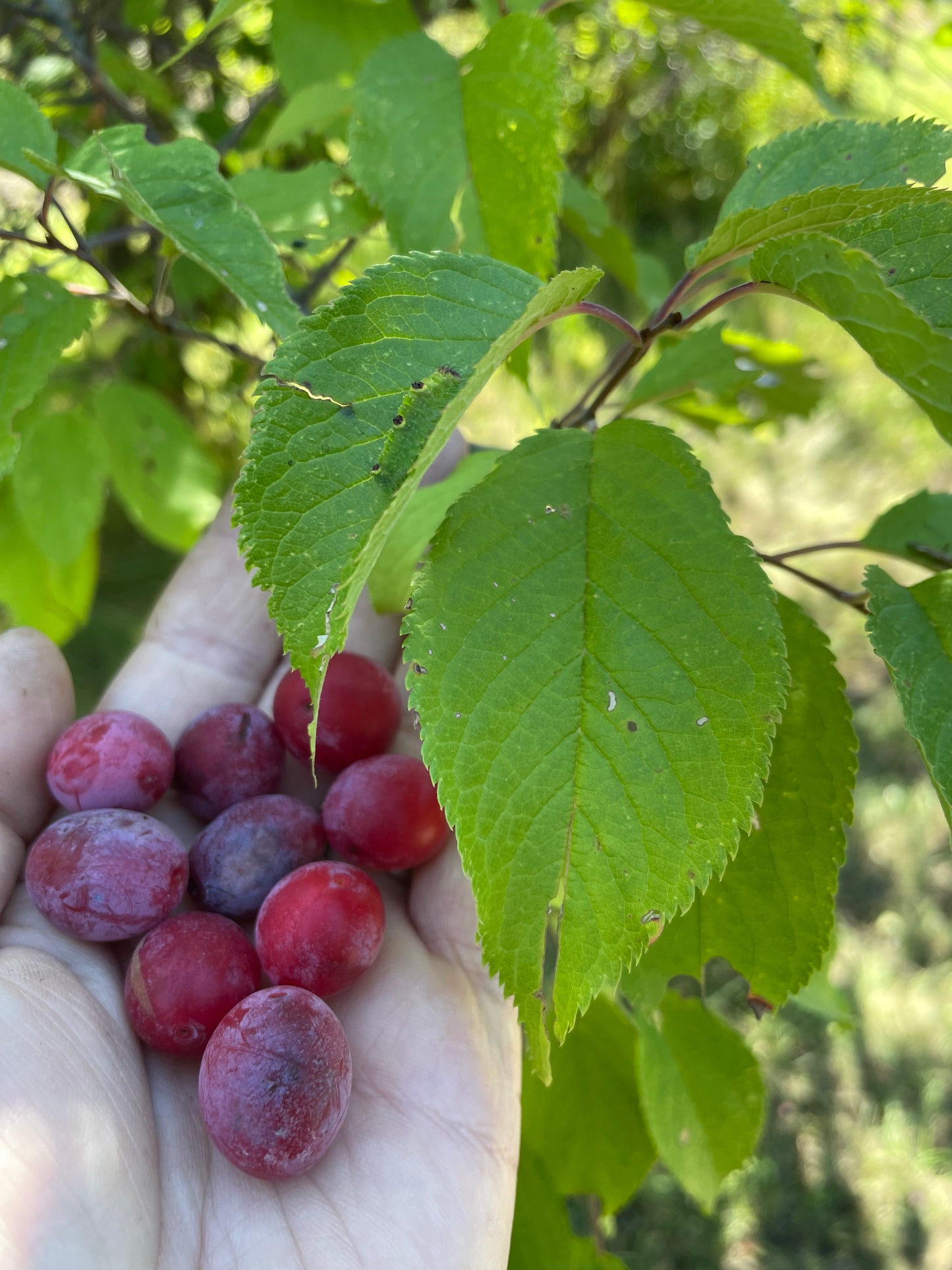
Le prunier sauvage d’Amérique (Prunus americana) produit de petites prunes rondes à la saveur sucrée et acidulée. Les fruits vont du jaune au rouge foncé, mesurent environ 5/8 à 1 pouce de diamètre et mûrissent ici à la fin d’août. Ils sont bons frais ou en confiture et en gelée.
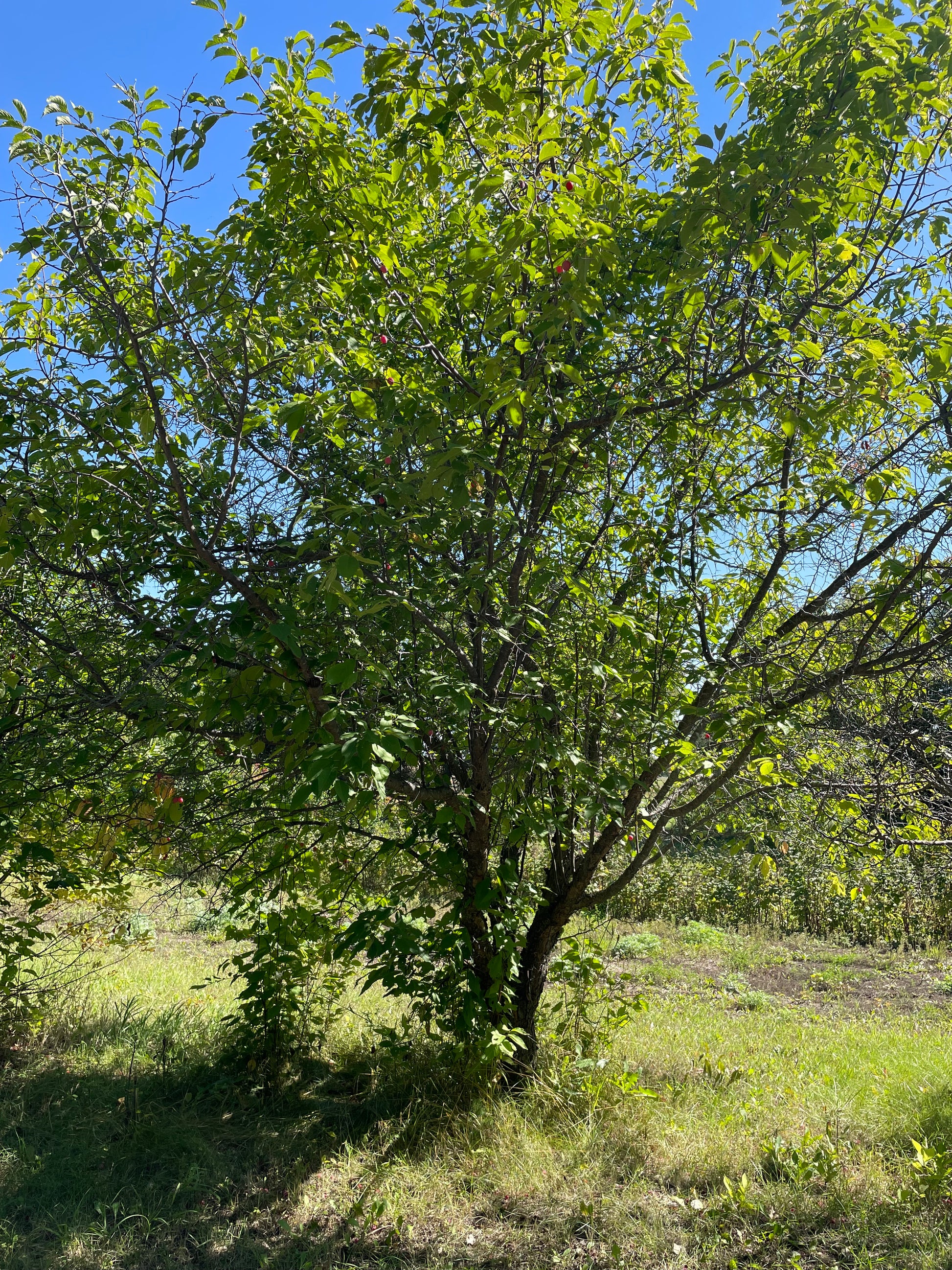
Les arbres sont d’excellents pollinisateurs pour d’autres pruniers et peuvent améliorer la nouaison dans une plantation mixte. À Oak Summit Nursery, nous cultivons aussi le prunier sauvage d’Amérique comme porte-greffe pour de nombreux cultivars de prunier. L’espèce nourrit la faune et peut prendre la forme d’un arbuste à plusieurs tiges ou d’un petit arbre.
M’aviser du retour en stock
Entrez votre adresse courriel pour recevoir une alerte lorsque cet article sera de nouveau offert.
Gérez cette alerte dans la liste des articles enregistrés, accessible depuis l’en-tête.
Faire germer ces semences
- Au chaud1 à 2 moisStratification au chaud
- Au froid4 à 6 moisStratification au froid
- SemisAprès l’étape au froid5 à 8 mois depuis le début
- Source des semences
- Manitoba
- Rusticité
- Zone 3
Comment stratifier les semences
L’étape au chaud d’abord. Gardez le même sac à température ambiante pendant la période au chaud indiquée, puis placez-le au réfrigérateur.
Au réfrigérateur. Placez les semences dans un sac avec un substrat humide comme de la mousse de tourbe, de la vermiculite, du sable ou de la fibre de coco. Le substrat sert uniquement à retenir l’humidité. Gardez le sac au réfrigérateur, au-dessus du point de congélation, pendant la période au froid indiquée, puis semez.
Ou à l’extérieur. Semez les semences à l’extérieur à l’automne et laissez l’hiver assurer la période au froid.
La plante issue de ces semences
Caractéristiques de culture
- Aire indigène
- Indigène du centre et de l’est du Canada et des États-Unis.
- Emplacement et sol
- Soleil ou ombre légère. Sol sableux ou limoneux et humide.
- Maturité
- De la fin août au début septembre, selon l’arbre et l’emplacement.
Répartition et rusticitéZone 3 · Cartes canadiennes pour cette plante

Vert : provinces où l’espèce est indigène
MB · NB · ON · QC · SK
Zone 3 et zones plus chaudes
Les données provinciales indiquent l’aire indigène, sans situer chaque population. La carte de rusticité indique la résistance au froid hivernal; le sol, l’humidité et la chaleur estivale comptent aussi.
À propos des cartes
Climat : Ressources naturelles Canada, 1991–2020. Répartition provinciale : VASCAN, selon les recherches botaniques conservées. Limites provinciales : Natural Earth, domaine public.
Licence du gouvernement ouvert – Canada Graines de cerisier de Nankin
 Graines d’abricotier de Mandchourie
 Semences de pruniers issus de semis
 Graines de cerisier de Virginie Garrington
 Graines de cerisier de Pennsylvanie