Passer aux informations produits
1 de 5

From our nursery

Photos from the nursery

Original photos of this plant from Oak Summit Nursery.

manchurian apricot seedlings. I started these in april in the greenhouse, here the batch is transplanted into large plug trays and starting to size up after three months. Our apricot seed is locally sourced, from the same orchard where Baker's Gold was selected.

Read this Field Note

red leafed, wild black, new oxheart/oblong, garrington (seedling?), large garrington? seedling. .. of note the wild and garrington fruit have a round seed, the rest have a pointed elongated one. about the pfra's seed orchards, the used garrington, goertz and wild collected seed to grow the chokecherry trees so there's this mix of genetics, though if you have extra large early ripening fruit good chance it's a garrington seedling. what I have grafted named garrington could have been a seedling from the pfra, or it could be the cultivar - after seeing larger fruit on some of these seedling trees it has me wondering. the real deal maxes out just over 1cm on the largest fruit. if anyone else has seen chokecherry with this elongated shape let me know. they seem to get more round as they ripen, though none of the ripest fruit are completely round.

Read this Field Note

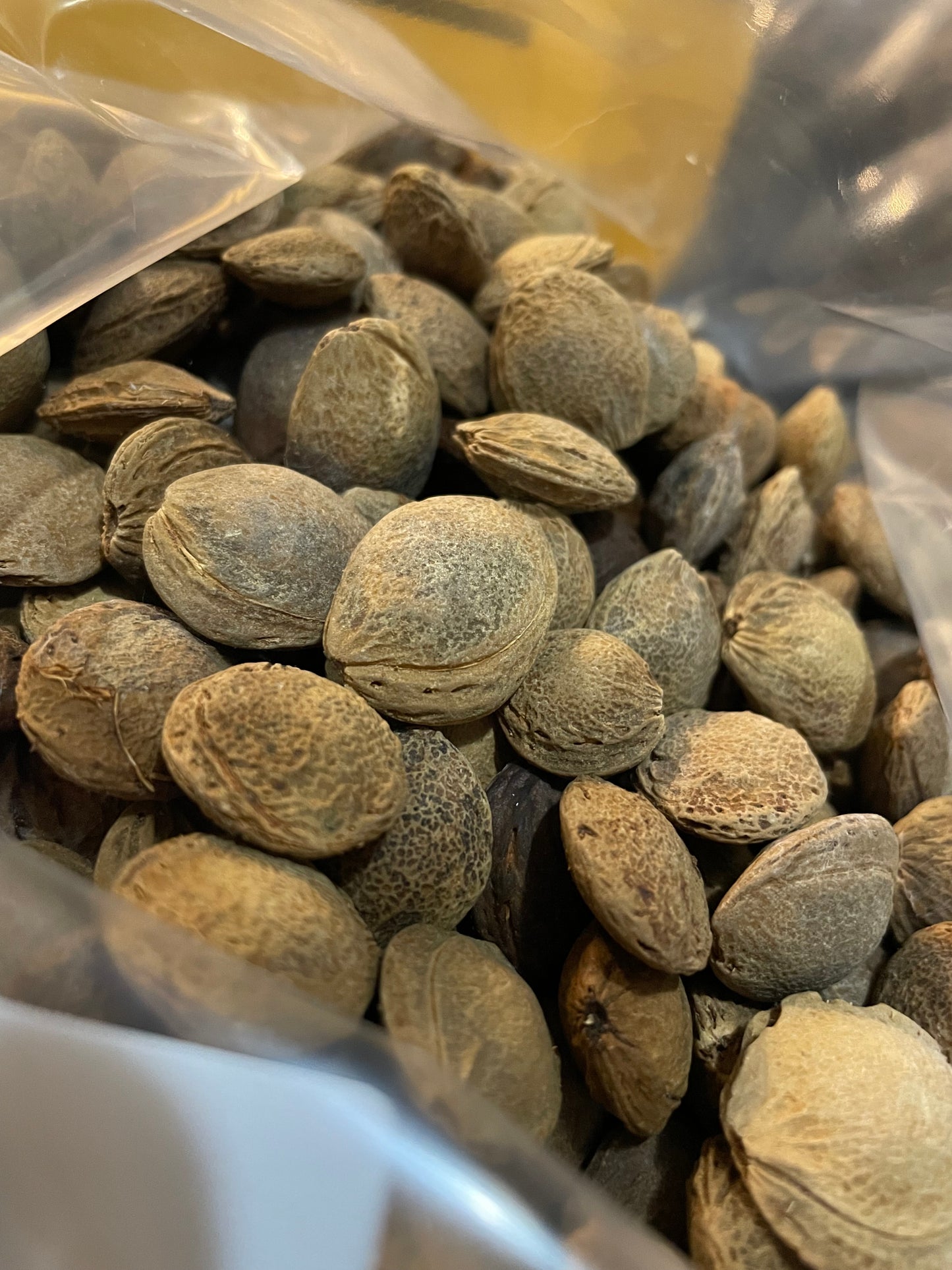
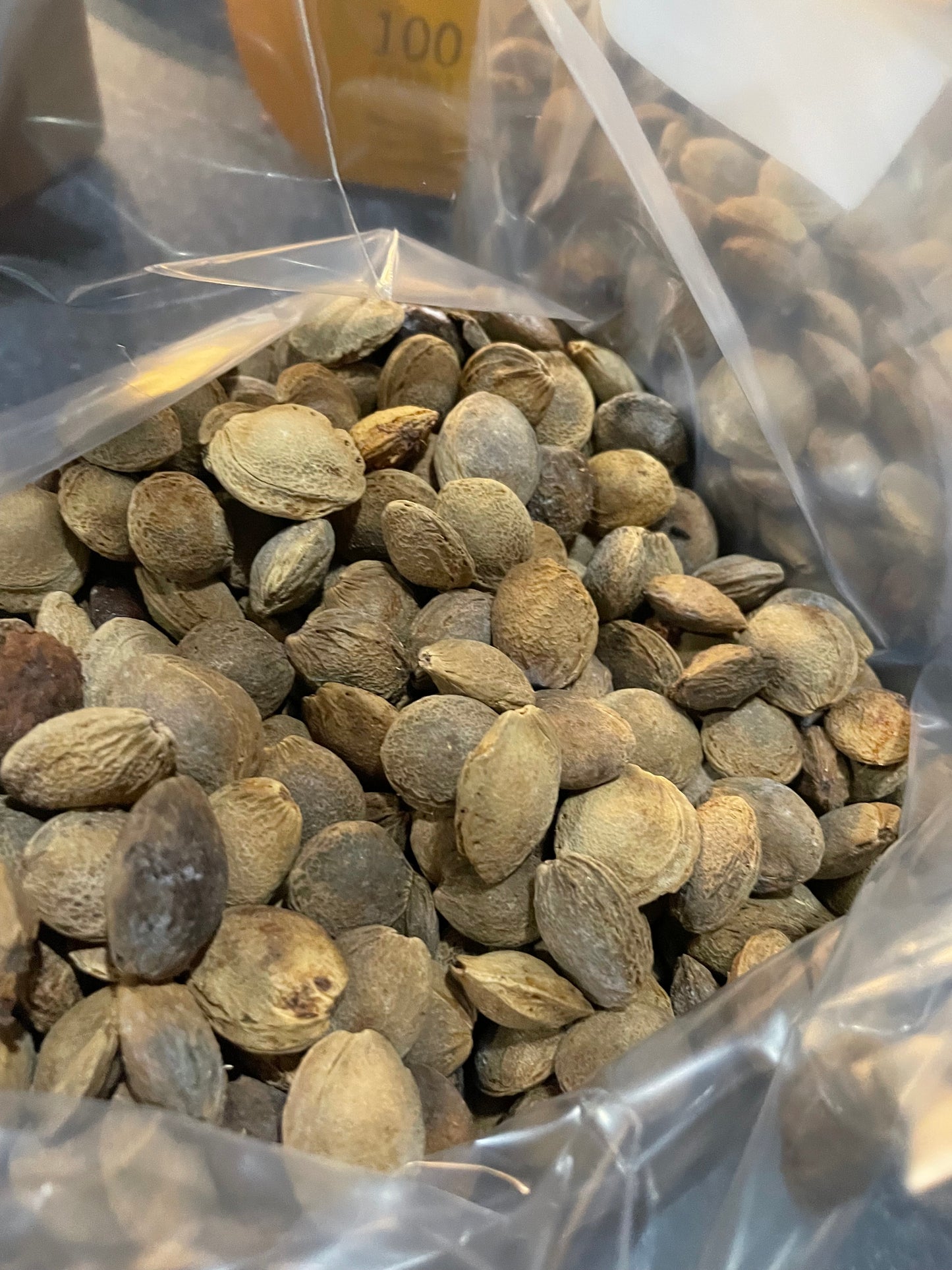
manchurian apricot, stratifying for about 3 months in a fridge and just starting to wake up. they're tricky to store, the seeds have a higher oil content than a plum and these seeds are from 2024, so I've been holding them around 10% moisture content but we had kernels that desiccated, most would rattle inside the shell with a gentle shake, so the rehydration protocol was very gradual over the winter. Seems like it worked, so I start them in trays to save greenhouse space and then once they come up and start to leaf out the plan is to transplant some into large plugs, some into small beds. manchurian apricot seed is notoriously hard to source, and knowing I can store it for at least a year is good news, trees often will only bear a good crop every few years.

Read this Field Note

I keep trays over the seeds as defense against squirrels and sometimes my cat likes to walk on them. also a bit of shade is good when it's hot, it's time now to take them off, manchurian apricot and siberian stone pine in these two. ready to transplant into plugs.

Read this Field Note

manchurian apricot seeds are in stock, apricots cold hardy to -40C/F. I’ll be growing these in our nursery and should have enough to make them available on our seed shop.

Read this Field Note

manchurian apricot seedlings, sourced from Manitoba super cold hardy -45. just went live on our fall sale

Read this Field Note

Oak Summit Nursery

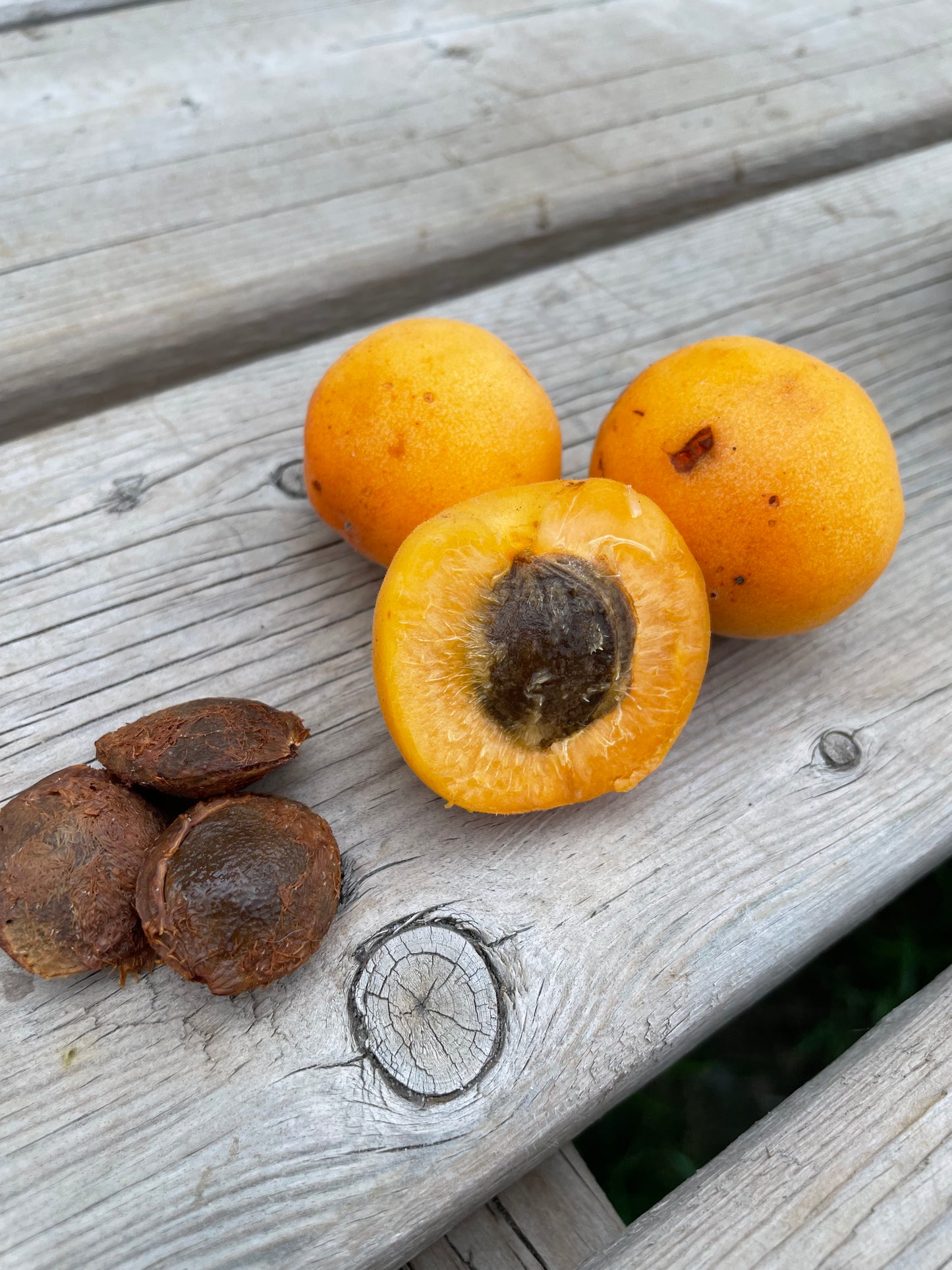
Graines d'abricot de Mandchourie (Prunus mandshurica) - Abricotier résistant au froid - (Zone 3) - 9 graines

Graines d'abricot de Mandchourie (Prunus mandshurica) - Abricotier résistant au froid - (Zone 3) - 9 graines

Prix habituel $8.95 CAD
Prix habituel Prix soldé $8.95 CAD
Vente Épuisé

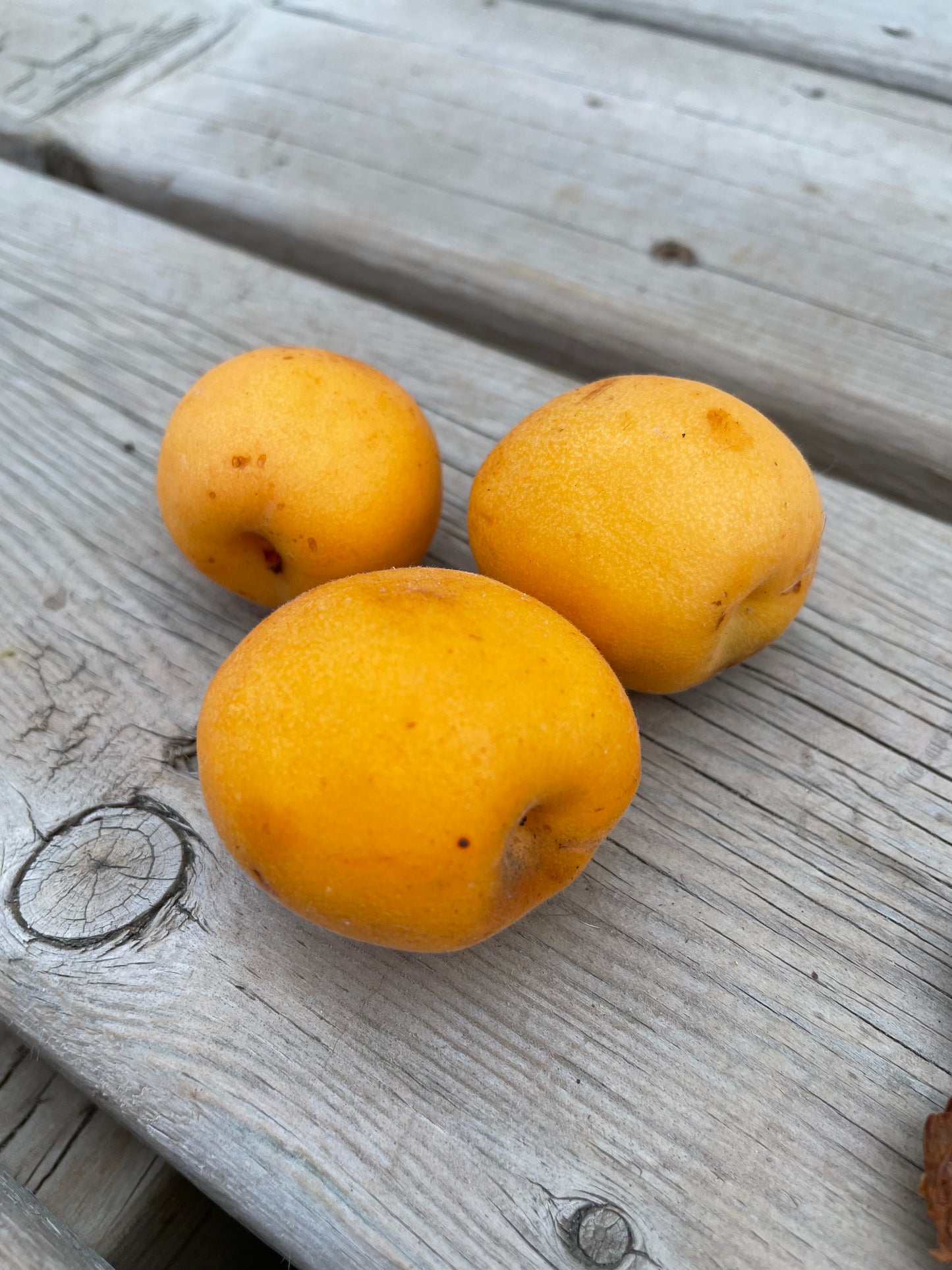
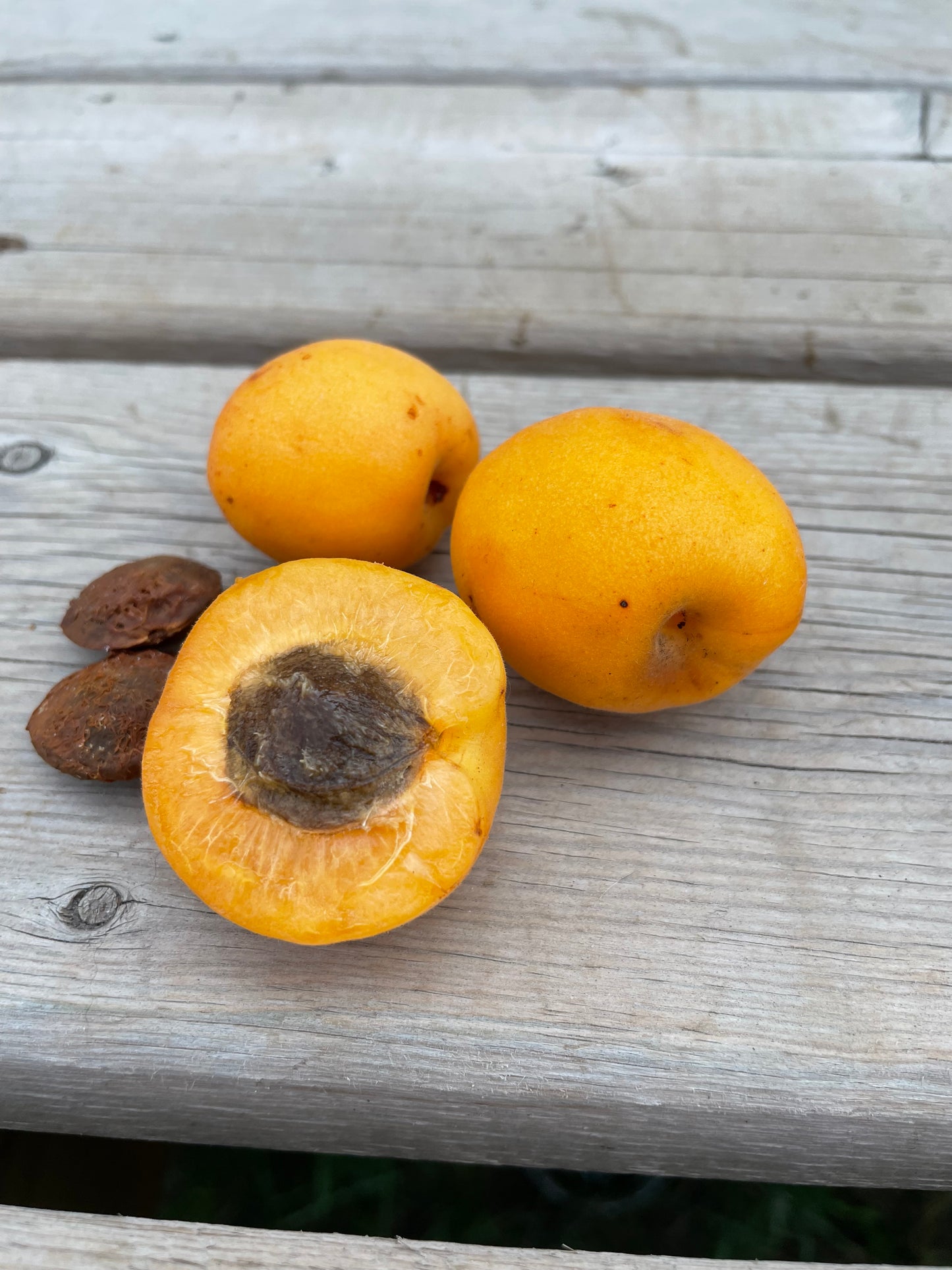
Les graines d'abricot proviennent d'un verger local. Elles proviennent d'arbres à fruits moyens à gros, résistants au froid et productifs. L'abricot de Mandchourie (Prunus armeniaca var. mandshurica) est une variété d'abricot rustique à floraison précoce, connue pour son adaptabilité aux climats froids. Originaire de la région de Mandchourie en Asie du Nord-Est, cet abricot produit des fruits de taille moyenne, jaunes à orange avec une légère teinte rouge à maturité. La chair est juteuse, ferme et sucrée, avec une nuance légèrement acidulée, ce qui la rend idéale pour la consommation fraîche, la mise en conserve et le séchage. Ce cultivar est particulièrement apprécié pour sa capacité à résister à des températures aussi basses que -40°F, ce qui le rend adapté à la croissance dans les zones USDA 3 à 7. L'arbre lui-même est souvent utilisé comme porte-greffe pour d'autres variétés d'abricots, également excellent comme pollinisateur pour les abricots de cultivar.

Maturité : juillet
Taille : 3–5 cm
Zone de rusticité au froid : 3
Source des semences : Manitoba

Stratification : 1 à 2 mois au chaud suivis de 3 à 4 mois au froid. Les graines de Prunus peuvent bénéficier d'une période de stratification chaude, suivie de plusieurs mois au froid. La plantation en extérieur à l'automne est une méthode simple et efficace.

Notify me when back in stock

Enter your email to add a back in stock reminder for this item.

This reminder is separate from products saved for later.

Afficher tous les détails