

Oak Summit Nursery
White Mulberry
White Mulberry
Plant orders start at $30.
Winter tree ordering reminder
This tree is not available in the current fall sale. Add a reminder for the winter tree ordering season.
Set a reminderCompare offered sizes
Couldn't load pickup availability
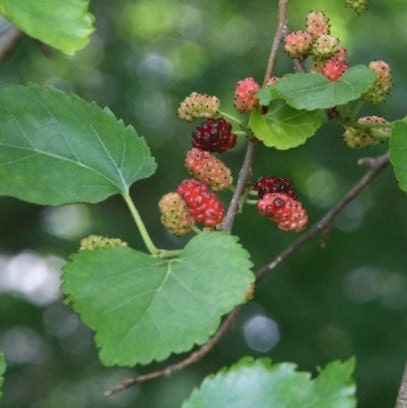
White Mulberry (Morus alba var. tatarica) is a fast growing shade tree with a broad spreading canopy and sweet white to pink fruit that attracts birds. The fruit ripens from late spring into early summer.
Native to China, White Mulberry has a long history in sericulture because its leaves are the primary food of silkworms. This hardier Tatarian form has been widely grown beyond its native range.
It is reliably hardy to Zone 4 and is the White Mulberry we recommend for prairie trials. Zone 3 remains borderline and calls for a sheltered microclimate. Our nursery grown seedlings have survived here, but we are still evaluating their long term hardiness.
White Mulberry can naturalize aggressively in warmer regions and can hybridize with threatened native Red Mulberry, especially in Ontario, so it should be planted only where appropriate.
Cold Hardiness Zone: 4
Mature Size: 30 to 50 ft tall, 20 to 40 ft wide
Winter tree ordering reminder
This tree is currently unavailable. Add a reminder and we’ll email when it returns for the winter tree ordering season.
Manage this reminder with your saved products from the header.

Growing details
- Origin and Manitoba status
- Native to China, widely introduced in North America and non-native in Manitoba
- Sprouting response
- May sprout from stumps, roots and cut stems after injury
- Growing site
- Productive growth on moist, well-drained soil; some poorer drainage tolerated
- Pollination context
- Generally dioecious, occasionally monoecious and wind-pollinated; individual sex not guaranteed
Cold hardinessZone 4 · Canadian maps for this plant

Zone 4 and warmer
The map shows minimum winter hardiness. Soil, moisture and summer warmth also affect how a plant grows.
About these maps
Climate: Natural Resources Canada, 1991–2020. Provincial distribution: VASCAN via retained botanical research. Province outlines: Natural Earth, public domain.
Open Government Licence – Canada