

Oak Summit Nursery
Favoritka Pear Tree
Favoritka Pear Tree
Plant orders start at $30.
Compare offered sizes
Couldn't load pickup availability
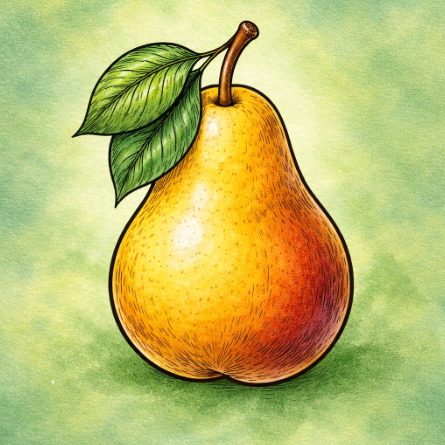
Favoritka is a Russian pear associated with breeding for the Ural region. It produces large fruit averaging about 200 grams, with greenish yellow skin and a dark pink blush. The flesh is buttery and sweet, suited to fresh eating and preserving.
Trees are productive but self sterile and require another compatible pear for pollination.
Growing details
- Hardiness
- Zone 3Recovered quickly after a minus 40 winter in Russian trials
- Fruit
- Large pears of 6 to 7 oz, greenish yellow with a dark pink blushButtery, sweet and juicy
- Uses
- Fresh eating and preservingKeeps one to two months in cold storage
- Mature size
- About 20 ft tall and 16 ft wideA tall, vigorous tree
- Disease
- High resistance to pear scabAlso resists gall mite
- Site and soil
- Full sun and well drained soil
Ripening
Mid to late September
Reported on the Canadian Prairies
More about this plant
Bred for the southern Urals
Favoritka comes from the South Ural Research Institute of Horticulture in Russia, where E. A. Falkenberg and F. M. Gasymov raised it from a cross of Dekabrinka and Forest Beauty. It has been in Russian state trials since 2009 and is noted there for bearing young.
Not Clapp's Favourite
An older American pear, Clapp's Favourite, is sometimes sold under a similar Russian name. This is the newer South Ural pear, a different variety.
Cold hardinessZone 3 · Canadian maps for this plant

Zone 3 and warmer
The map shows minimum winter hardiness. Soil, moisture and summer warmth also affect how a plant grows.
About these maps
Climate: Natural Resources Canada, 1991–2020. Provincial distribution: VASCAN via retained botanical research. Province outlines: Natural Earth, public domain.
Open Government Licence – CanadaPollination
Favoritka needs a second pear nearby to set fruit. Its breeders name Vekovaya and Larinskaya as the best partners. Other pears work too.
The partners we list are sold out right now.